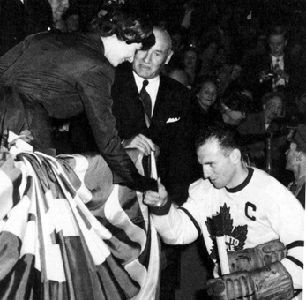
The T.O. You Don’t Know uncovers hidden stories Toronto has long overlooked—through 50+ historic sites, forgotten events, and fascinating local narratives and unique objects. It surfaces the ignored, the hyperlocal, and the quietly radical, reinforcing that history is not fixed, but layered and still unfolding.
The Toronto Rebellion may sound distant from the city we know today, but one of its most important moments unfolded near present-day Yonge Street and Eglinton Avenue.
Where the Mayor Tried to Overthrow the Government
Video
• 1:33
In the late 19th and early 20th centuries, The Ward was one of Toronto’s most diverse neighbourhoods and often the first home for newcomers arriving in the city.
Toronto’s Most Multicultural Neighbourhood
Video
• 1:22
Toronto’s last fatal duel took place near the present-day intersection of Bay and Grosvenor Streets — an area that was farmland at the time.
Toronto’s Last Fatal Duel
Video
• 1:05
“I guide my life. It is mine.”
Jackie Shane (1940 – 2019) was the toast of Toronto’s music scene in the 1960s and a true trailblazer. She lived her life on her own terms, at a time when white society restricted the freedoms of Black and 2SLGBTQ+ communities.
Toronto Sound
Video
• 1:07
In 1793, John Simcoe, the Lieutenant-Governor of Canada, wanted a summer cottage. So he built a relatively basic log cabin and thought it would be funny to name it Castle Frank (after his son).
He was clearly no comedian. But the joke name for his summer residence stuck.
The Story of Castle Frank
Video
• 1:06
The Storm That Formed the Toronto Islands
Video
• 1:10
In the 1970s, Yonge and Bloor looked very different from the intersection many Torontonians know today.
The Sexual Supermarket
Video
• 1:07
Long before the Raptors, Toronto played a historic role in professional basketball.
The NBA Started Here
Video
• 1:03
For more than a century, the Orange Order — a Protestant fraternal organization rooted in British loyalism and anti-Catholic politics — held enormous influence over Toronto’s political and social life.
test
The Mosque That Was Once A W.A.S.P. Supremacist Lodge
Video
• 1:05
One of Toronto’s “lost” subway stations is hiding in plain sight beneath Bay Station.
The Lost Subway Station
Video
• 1:10
At 15 Duncan Street, beneath an otherwise unremarkable downtown building, Toronto’s punk scene found its first real home.
The Crash n’ Burn Club
Video
• 1:15
For much of the last century, Toronto was not a welcoming place for many of the people who called it home. But across the city, small pockets of safety and community emerged in unexpected places.
The Continental Hotel
Video
• 1:23
In 1855, a visiting American circus troupe found themselves at the centre of one of Toronto’s strangest public riots.
The Circus Riots
Video
• 1:14
Hidden beneath Trinity Bellwoods Park is one of Toronto’s strangest buried pieces of infrastructure: a fully intact bridge.
The Buried Bridge
Video
• 1:01
Hold on to your toques for this one. From 1912 to 1961, tobogganing was officially a crime in the City of Toronto.
Sunday No-Funday
Video
• 1:00
St. Lawrence Market was established in 1803. Not only was it the only market in Toronto where you could legally buy milk, eggs, butter and meat on Saturday, it was also the birthplace of the peameal bacon sandwich thanks to market vendor and butcher William Davies.
St. Lawrence Market
Video
• 1:09
St. James Park lies next to the St. James Cathedral, covered by parks and garden. However, during the cholera outbreaks of the mid-1800s, the site was used as a mass grave to prevent the spread of the deadly disease.
St. James Park’s Mass Graves
Video
• 1:08
How did Torontonians get on TV in the ‘90s?
The easiest, cheapest way was CityTV’s Speakers Corner. For $1, you could enter the video booth at the corner of Queen and John and record your piece in 60 seconds. The best and weirdest features made a curated selection aired on Sundays.
Speakers Corner
Video
• 1:16
Like much of Toronto, this building reinvented itself many times over.
Site of Sin and Debauchery
Video
• 1:18
Long before electronic music became mainstream, Toronto’s underground club scene was taking shape inside a former club space at 185 Richmond Street West.
Site of Pioneering EDM Club
Video
• 1:04
Toronto’s political history has never been free of scandal.
Secret Brothel Owned By 19th Century Mayor
Video
• 1:21
Before Liberty Village became known for condos, cafés, and Lamport Stadium, the site at 1155 King Street West housed the Andrew Mercer Reformatory for Women — an institution created in 1880 to confine women considered “undesirable” by Victorian society.
Reformatory “For Women Unable to Be Improved or Fixed”
Video
• 1:04
In 1947, Christie Pits became the centre of one of Toronto’s most unusual protests: a citywide movement led almost entirely by children.
Rally to Support Children’s Candy Bar Strike
Video
• 1:10
The first Pussy Palace event was in 1998. Organized by the Toronto Women’s
Bathhouse Committee, it took place at Club Toronto, a gay men’s bathhouse located at 231 Mutual Street. In 2000, police raided the event on the claim of a liquor violation. The LGBTQAI+ community then took to the streets in protest of the police department’s overreach and invasion of privacy.
Pussy Palace
Video
• 1:19
Operation Soap may sound almost absurd by name, but it marked one of the most significant turning points in Toronto’s LGBTQ2S+ history.
Operation Soap
Video
• 1:16
Fred Rogers (Mr. Rogers) actually started his children-oriented programming in Toronto. Along with puppeteer Ernie Coombs, he started Misterogers on the CBC in 1962. Four years later, he decided to return to the US to start Mr. Rogers’ Neighborhood, entrusting his mission with Ernie Coombs who would go on to start Mr. Dressup in 1967.
Mr. Rogers’ Neighborhood
Video
• 1:25
Toronto’s Morality Department was established in 1886 by Mayor William Holmes Howland as a way to “root out vice,” ensure the “cleanliness of the city,” and supposedly uphold the moral purity of “Toronto the Good.” In actuality, it would target same-sex relationships, interracial relationships, and women deemed improper. Later, it would be reimagined as a vice squad to enforce Prohibition and other drug bans.
Morality Police
Video
• 1:18
On a crisp day in early November 1937, about 200 women gathered at Toronto’s Old City Hall. They were protesting the cost of milk. It had risen from 10 cents to 13 cents per 2-pint bottle.
Milk Protest
Video
• 1:33
Just off Highway 427 lies a massive, intricate, hand-carved building known as the BAPS Shri Swaminarayan Mandir complex.
Marvel in Marble
Video
• 1:06
Argentinian soccer legend Diego Maradona played his second-last soccer match at Toronto’s Birchmount Stadium on September 2, 1996, subbing in for his brother Lalo who played in the semi-professional Canadian National Soccer League (CNSL).
Maradona’s (Second) Last Soccer Match
Video
• 0:59
Among Toronto’s rap and hip-hop scenes, the artist that put it all on the map is Scarborough’s very own Maestro Fresh Wes (born 1968). And the song that did it? “Let Your Backbone Slide,” released on 1989’s Symphony in Effect.
Let Your Backbone Slide
Video
• 1:16
In 1950, Letros Tavern – a gay club renowned for its night life, drag entertainment, and their Egyptian-themed Nile Room opened across from the King Edward Hotel. Soon a tradition began where Letros patrons would walk over to the King Eddy paired as man and woman to avoid scrutiny, before heading off with their actual same-sex partners to spend the night. Eventually, the King Eddy caught on and tried to put a stop to it.
King Eddy Gay Haunt
Video
• 1:27
Did Toronto newspapers really report on a puppet kidnapping?
Yes! The puppets were Uncle Chichimus and Hollyhock. They introduced the day’s programming on CBC. In 1954, they were stolen from an unlocked car, so their programming was suspended until the creator, John E. Conway (1922) 2003), could make new ones.
Kidnapping of Chichimus
Video
• 1:07
In 1977, Toronto briefly found itself at the centre of international rock-and-roll headlines when Rolling Stones guitarist Keith Richards was arrested at the Harbour Castle Westin Hotel.
Keith Richards’ Drug Bust
Video
• 1:16
In the mid-1980s, Kensington Market became the centre of an unexpected national debate now remembered as the “Patty Wars.”
Jamaican Patty Wars
Video
• 1:41
In the 1960s, Yorkville became the centre of Toronto’s growing counterculture movement.
Hub of 1960s Hippie Counterculture
Video
• 1:27
For over 75 years, the discount king of Toronto was “Honest” Ed Mirvish (1914 – 2007). Honest Ed’s, located at Bloor and Bathurst, sold all types of necessary household supplies for super cheap, making it a first stop for new Torontonians setting up homes.
Honest Ed’s
Video
• 1:12
One of North America’s first documented serial killers, H. H. Holmes, settled in Toronto from Chicago in 1894. Living at 16 St. Vincent St., he was finally identified, arrested, convicted, and hanged on May 7, 1896.
H. H. Holmes
Video
• 1:14
When Toronto hosted the G20 Summit in June 2010, the city flooded with anti-poverty and anti-establishment protestors advocating for relief from the recent 2008 financial crisis. While the majority of the protests were non-violent, some groups began riots throughout the downtown core and in response the police responded with unprecedented tactics.
G20 Protests
Video
• 1:29
The First Baptist Church (FBC) of Toronto was established in 1826 by a group of Freedom Seekers who had arrived in Canada from the United States, where they had escaped slavery.
Freedom, Faith, Foundation
Video
• 1:27
Exhibition Stadium
Video
• 1:09
The Distillery district is considered to be one of Toronto’s most haunted locales, namely because of the tragedy of James Worts. One of the partners of whiskey company Gooderham & Worts, James would go on to commit suicide by drowning in one of the distillery’s vats short after the death of his wife, Elizabeth.
Distillery Ghosts
Video
• 1:27
Vazaleen was a monthly women-centric queer club night. Organized by artist Will Munro (1975-2010), it featured lube wrestling and bobbing for butt plugs, set against a backdrop of 1970s-era porno flicks, punk rock, and funk. It made its freaky debut in 1999.
Come One, Come All!
Video
• 1:22
85 St. George Street may look like an ordinary Toronto campus building, but it quietly played a role in one of the most recognizable films of the 1990s.
College in Good Will Hunting
Video
• 1:15
In response to the AIDS epidemic of the 1980s that devastated the LGBTQ community, an activist organization named AIDS Action Now! organized a protest to push Health Canada for more access to experimental AIDS treatments and medicine. The group set up a pile of empty coffins outside of Toronto General Hospital in the March of 1988 as a symbol of the lives lost while waiting for a cure.
Coffin Protest
Video
• 1:20
Across Toronto, small details hidden in plain sight often carry deeper meanings for the communities that placed them there.
Coded Tiles of Little Portugal
Video
• 0:49
The CN Tower, Toronto’s world-renowned landmark, took over 8 years to build from 1968 to 1976. Using slip-form construction whereby concrete was poured into molds that gradually build upon itself, the building stands at 553.3 metres tall.
CN Tower
Video
• 1:06
Bomb Girls” were Canadian women who worked in munitions factories during the Second World War.
Bomb Girls
Video
• 1:28
In 1926, Toronto became home to one of the strangest inheritance disputes in Canadian history.
Birthplace of Pregnancy Racing
Video
• 1:32
Today, Davenport Road and Toronto’s waterfront feel worlds apart. But thousands of years ago, they were closely connected.
13,000 Year Old Indigenous Road
Video
• 1:02

November 24, 2026
November 19, 2026

November 14, 2026
November 5, 2026
October 29, 2026
October 24, 2026
October 7, 2026

October 3, 2026 |
October 4, 2026
September 26, 2026

June 11, 2026 |
December 30, 2026
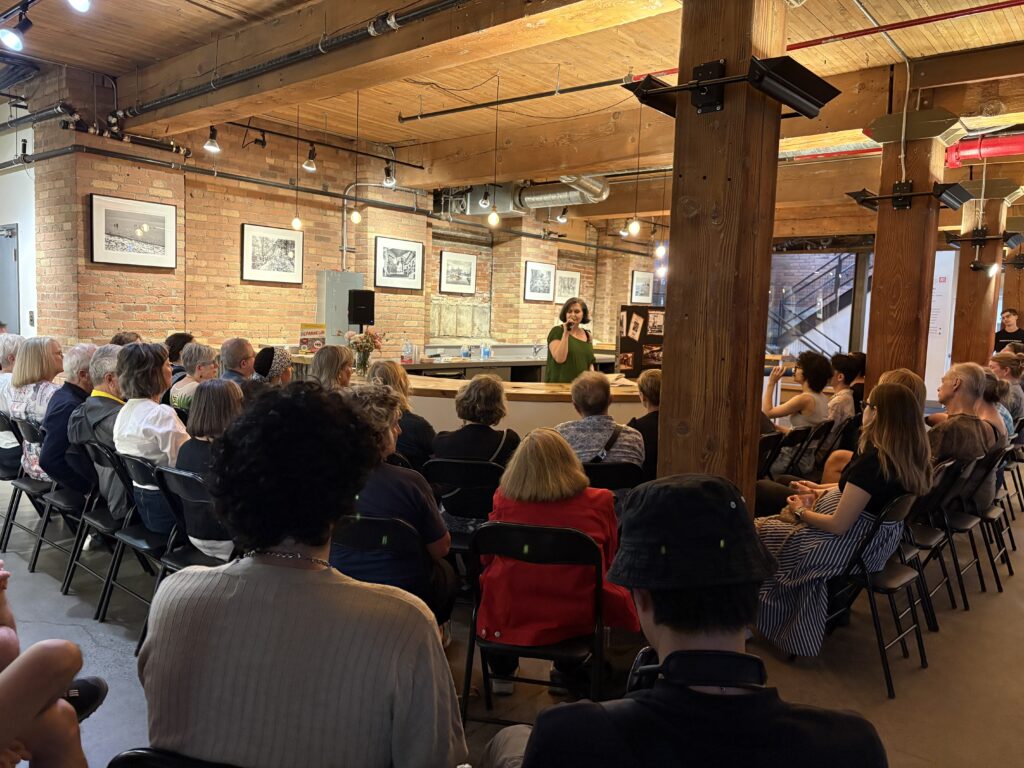
The T.O. You Don’t Know is part of the Museum of Toronto’s mission to connect the past to the present. By surfacing the overlooked, the hyperlocal, and the quietly radical, we’re reminding Torontonians that history is never fixed, it’s layered, and still unfolding.
The Exhibition was co-curated by Christina Bagatavicius and Museum of Toronto.
Exhibition design by elsonstudio and Interpretation by Laura Robb.
Build by Story Factory Studios, Huy Lam, and Timothy Manalo.
Special thanks to Tara Bissett, Adam Bunch, Michael Comeau, Maggie Helwig, Ken Maracle, Niki Ruebens, Wayne Ruebens, Archaeological Services Inc, Bomb Girls Legacy Foundation, Canadian Baseball Hall of Fame, Canadian Fire Fighters Museum, Canadian Museum of Health Care, Canadian National Exhibition, City of Toronto, First Baptist Church, Hockey Hall of Fame & Museum, Lakeshore Grounds Interpretive Centre, Meddling with Nature, Redpath Sugar Ltd., Textile Museum of Canada, Toronto Metropolitan University Fashion Research Centre, Toronto Police Discovery Centre & Museum, The Second City, The Village at Black Creek, University of Waterloo’s School of Architecture.
Museum of Toronto is made possible with the generous support of Diane Blake and Stephen Smith.
Special thanks to our Presenting Sponsors RBC Foundation

With Support from XYZ Storage

Featuring objects, archival materials, photographs, oral histories, maps, and site-based details drawn from private collections, public institutions, and community archives — uncovering stories from the loud to the nearly lost.
As a non-profit cultural institution, Museum of Toronto would like to acknowledge the incredible work of those featured in the exhibition. This exhibition is designed for teaching, scholarship, education, and research purposes only. Our intent is to present an engaging experience that respects the rights of creators, and fosters a spirit of shared knowledge through the “fair dealing” under the Copyright Act of Canada.