
Please remember that insects, birds, and other animals don’t have access to grocery stores: nature is their ‘food bank.’ If you forage, please do so sparingly and respectfully.
Foraged food doesn’t come with food labels, so err on the side of safety. Unless you know a food is safe to consume, it is better to leave it where it is.
Toronto’s Changing Forest Cover
The lands now known as Toronto were once covered in forests made up of beech, basswood, maple, pine, and fir trees.
But these weren’t unoccupied lands. The Seneca and the Huron-Wendat before them removed some forest to cultivate extensive fields of maize, beans, and squash around their village sites.
European settlers changed the look of the landscape on a much larger scale beginning in the 1790s. By axe and by fire, Toronto’s forests fell to supply ship masts and house frames, to warm buildings, and to clear land for farming.
By the early 1900s, settlers had removed nearly all of Toronto’s old growth forests. Less than 10% remained.
Today, the city’s forest cover is almost three times greater than it was in 1900. Neighbourhood trees shade and cool city streets and reduce pollution. But an aging canopy and the spread of invasive species like ailanthus and Norway maple mean there’s work to be done. Through canopy health management and planting programs focused on native tree species, the City of Toronto hopes to increase Toronto’s forest cover to 40% by 2050.
Mast Years
Does it sometimes feel like there are more squirrels in our city? Naturalists point to “mast years” as the reason: when trees and shrubs produce a larger-than-typical crop of nuts and berries (or “mast”) in a season. Mast years means more food, which ultimately means a surge in squirrel populations.
Braiding Sweetgrass
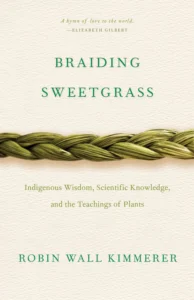
In her book Braiding Sweetgrass, Indigenous scientist and botanist Robin Wall Kimmerer outlines guidelines for what she calls an “Honorable Harvest”:
- Know the ways of the ones who take care of you, so that you may take care of them.
- Introduce yourself. Be accountable as the one who comes asking for life.
- Ask permission before taking. Abide by the answer.
- Never take the first. Never take the last.
- Take only what you need.
- Take only that which is given.
- Never take more than half. Leave some for others.
- Harvest in a way that minimizes harm.
- Use it respectfully. Never waste what you have taken.
- Share.
- Give thanks for what you have been given.
- Give a gift, in reciprocity for what you have taken.
- Sustain the ones who sustain you and the earth will last forever.