Quick Facts
Number of apartments buildings in the City of Toronto with five or more storeys: 542,625. That’s 46.7% of all dwellings!
Number of concrete “slab” towers (1960s-1980s) in the City of Toronto: 1,715
Number of high-rise apartments that need serious repair (2021): 26,700
In the 1950s through 1970s, Toronto responded to a massive population boom by constructing apartment towers — also known as vertical neighbourhoods. In master–planned communities like East York, the mid-20th century innovation of the apartment tower has found new life — and new challenges — in a 21st century city.
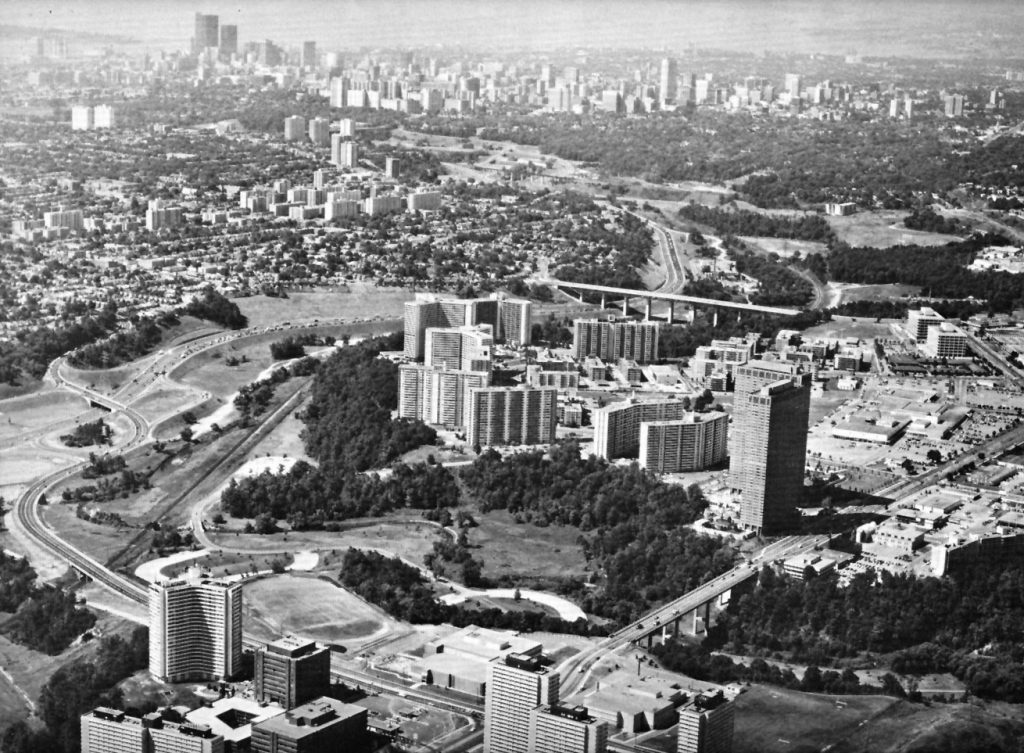
Following the Second World War, Toronto’s population surged with newcomers, and development moved northward. As in many North American cities at mid-century, urban planners considered new solutions for accommodating growth. In the Town of Leaside, later part of East York, planner Eugene Faludi spearheaded a plan in 1955 to redevelop a racetrack. This land became Thorncliffe Park, one of Canada’s first apartment tower neighbourhoods.
The master plan for Thorncliffe Park included clusters of low-, mid-, and high-rise buildings, intended to house 12,500 people. At the time, the area’s towers were internationally recognized as being modern and innovative, with a range of apartment configurations and amenities.
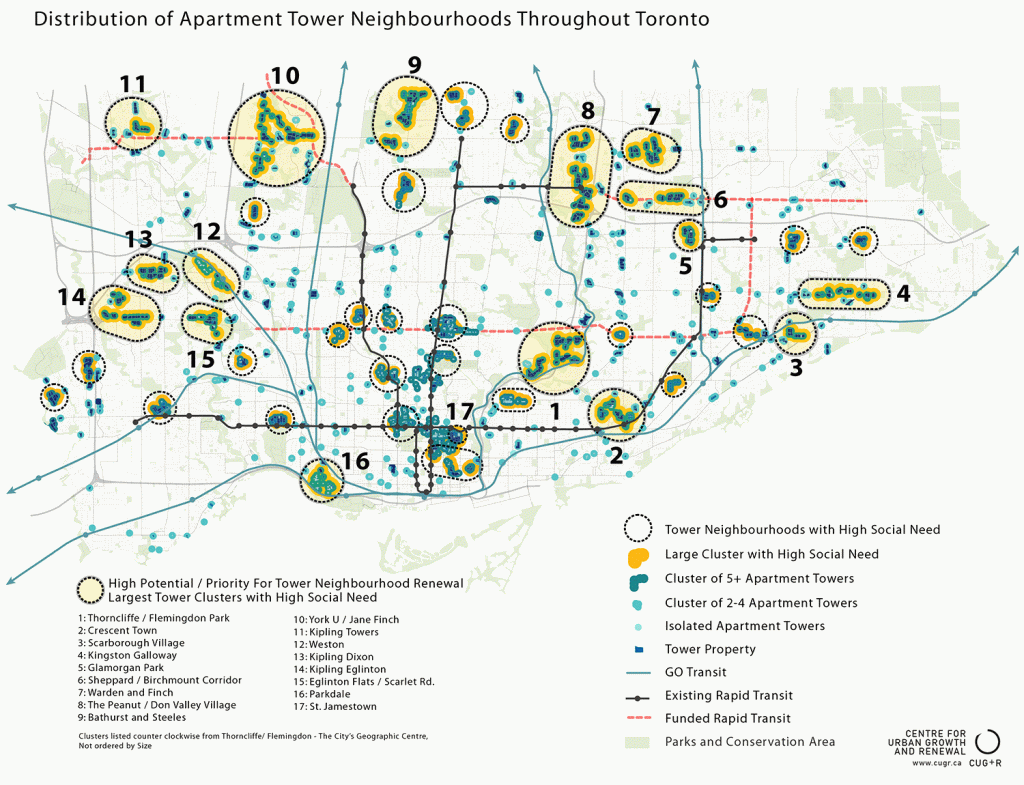
Today, Toronto’s tower neighbourhoods are more densely populated than intended, and many of the buildings require substantial rehabilitation, more than any other city in North America. Thorncliffe Park is home to mostly moderate-income families who are newcomers to Canada, including a sizeable Muslim population. Anchored by grassroots organizations and an active, multicultural community, Thorncliffe Park is a lively, entrepreneurial neighbourhood also in need of reinvestment.