Quick Facts
Toronto has the 4th-largest Indigenous population of any city in Canada.
35% of Toronto’s Indigenous community has experienced homelessness.
In 2022, City Council adopted a Reconciliation Action Plan with 28 calls-to-action.
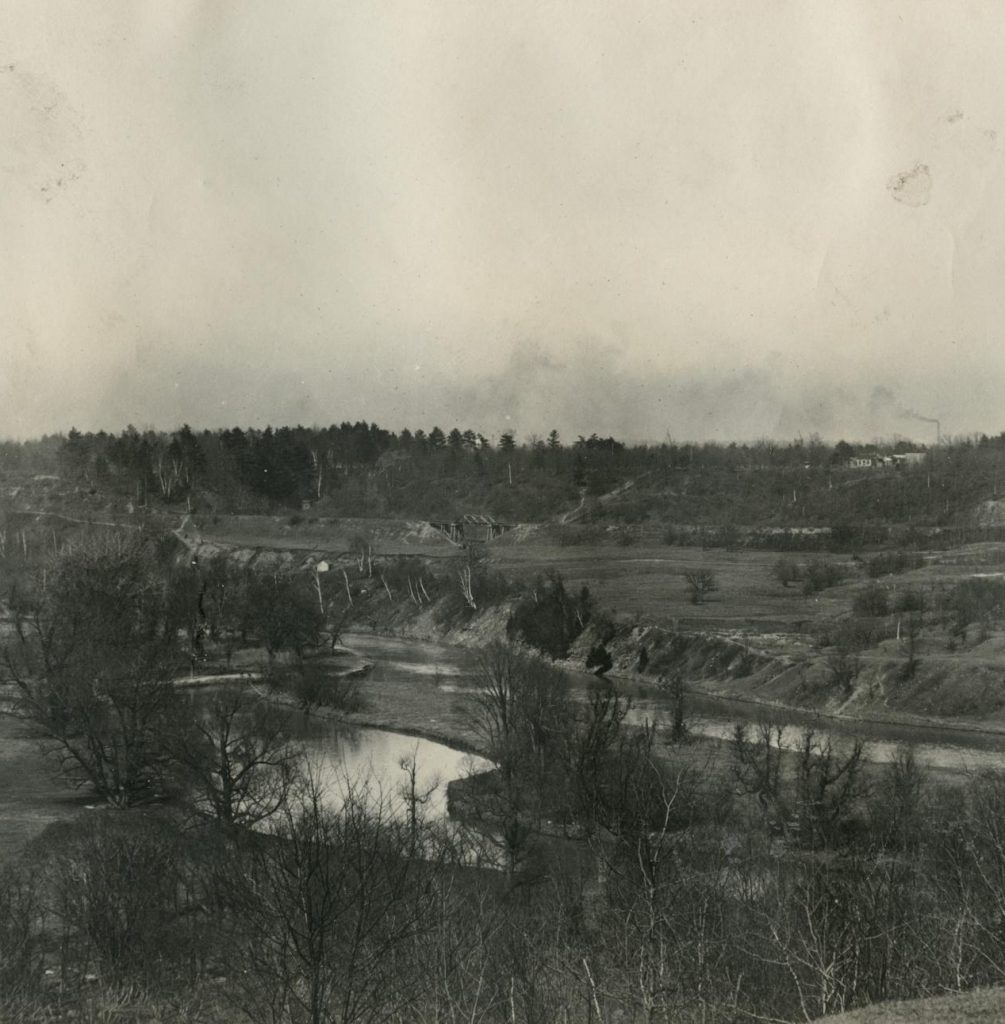
Predating the colonial city, Indigenous people lived, learned, worked, and played in harmony with the land. Teiaiagon, meaning “crosses the stream,” was a Haudenosaunee village consisting of about 20-30 longhouses on the east bank of what we now call the Humber River and was established in the 1670s. Located close to this former village and now known as Baby Point is an enclave named after James Baby, a colonial judge and land speculator.
Toronto gets its name from the passage of the Humber River referred to as Tkaronto. Several groups of Indigenous Peoples have lived on this land for at least 12,000 years including the Anishnaabeg, the Haudenosaunee, and Wendat. The region has a rich history of Indigenous settlement and transportation routes, including the Carrying Place Trail along the Humber River, and Gete-Onigaming, a portage following the glacial Lake Iroquois shoreline which is now known as Davenport Road.
Besides Teiaiagon, settlements existed along the Scarborough Bluffs near the Rouge River – among them, a community of 16 longhouses with artifacts dating to 1,400 CE. In North York’s St. Andrews-Windfields neighbourhood, archaeologists working with Six Nations excavated a Wendat ossuary in 1997 during construction on a soccer field near Leslie Street and Highway 401. The structure, a burial site, dates to 1280 CE.
During the colonial period, representatives of the British Crown negotiated the Toronto Purchase (1787-1805) with the Mississaugas of the Credit. Over a century later, the federal government signed the Williams Treaties (1923) with the Anishinaabe Chippewa of the Simcoe communities of Beausoleil, Georgina Island, and Rama, and the Anishinaabe Michi Saagiig of the north shore of Lake Ontario, including Alderville, Curve Lake, Hiawatha, and Scugog Island. Both highly contentious, these treaties have since been the subject of extensive contemporary legal activity to provide adequate compensation and recognition for the false surrender of vast tracts of land.
Currently, about 70,000 First Nations, Métis, and Inuit peoples live in Toronto and across the GTA, with core institutions such as the Native Canadian Centre, Anishnawbe Health and Kapapamahchakwew – Wandering Spirit School.