

Every story in this collection is a thread in a larger fabric: the communities that put down roots, the spaces that held them, the events that shifted something, and the individuals whose contributions didn’t always make the history books but shaped the city all the same. Taken together, they’re a reminder that Toronto’s identity has never been fixed. It’s always been in the process of becoming.
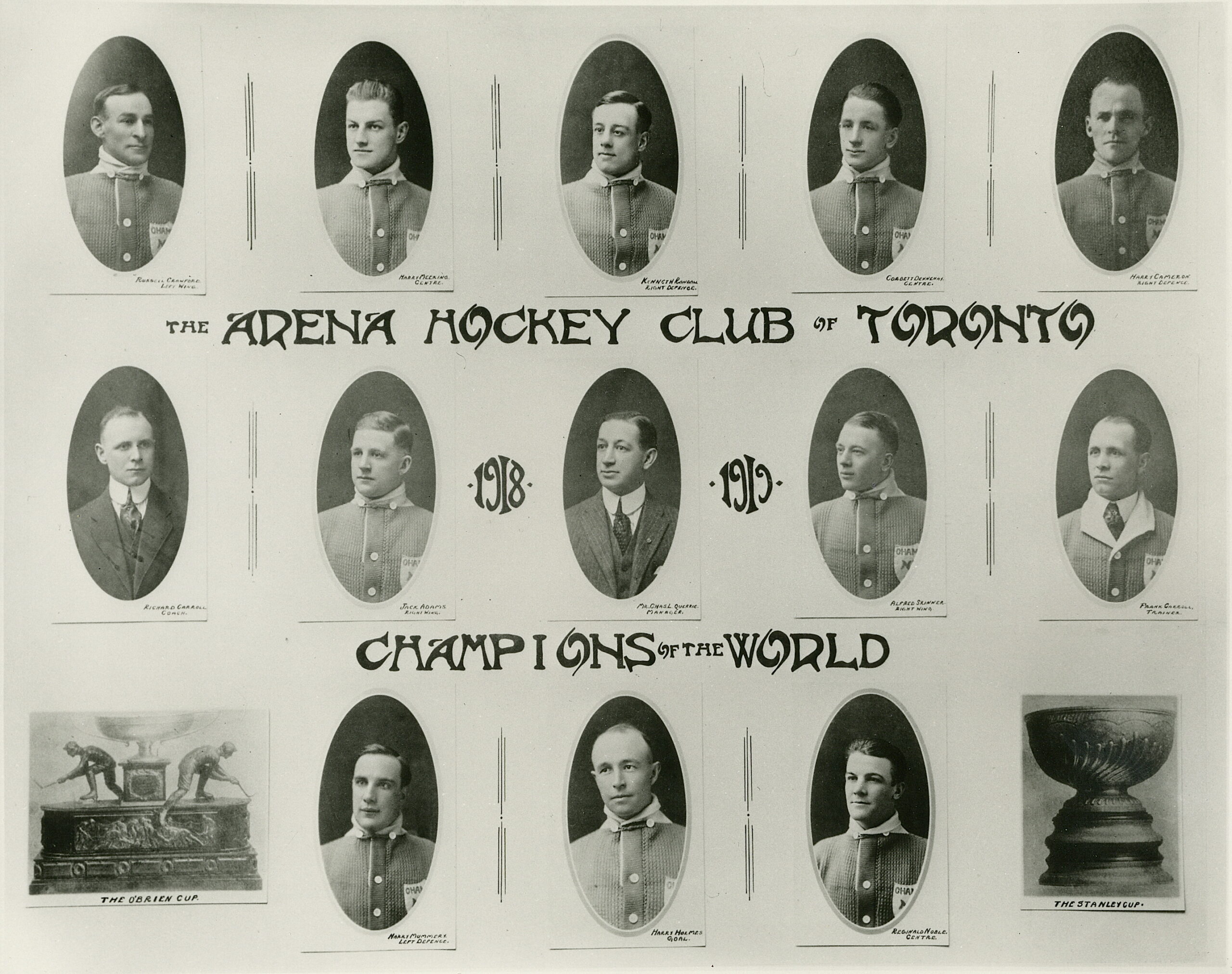
This is how Toronto’s original “nameless” NHL team won the Stanley Cup and brought the sport to Hogtown.
A small game in 1917 with a nameless team kicked off what would become over a century of NHL hockey history in Toronto and the country as a whole. It was a 10-9 game in Montreal and our team didn’t even have a name, perhaps things could only go up from there.
In 1917, Toronto’s local team saw it’s first National Hockey League game—a battle between the Montreal Wanderers and the Toronto Arenas. Technically, the Toronto team was nameless at the time and were haphazardly given a title because they played in Arena Gardens (a venue on Mutual Street located near St. Michael’s Cathedral at Church Street and Shuter Street).
According to the official Maple Leafs website, only 700 people attended the match and Toronto lost the game 10-9.
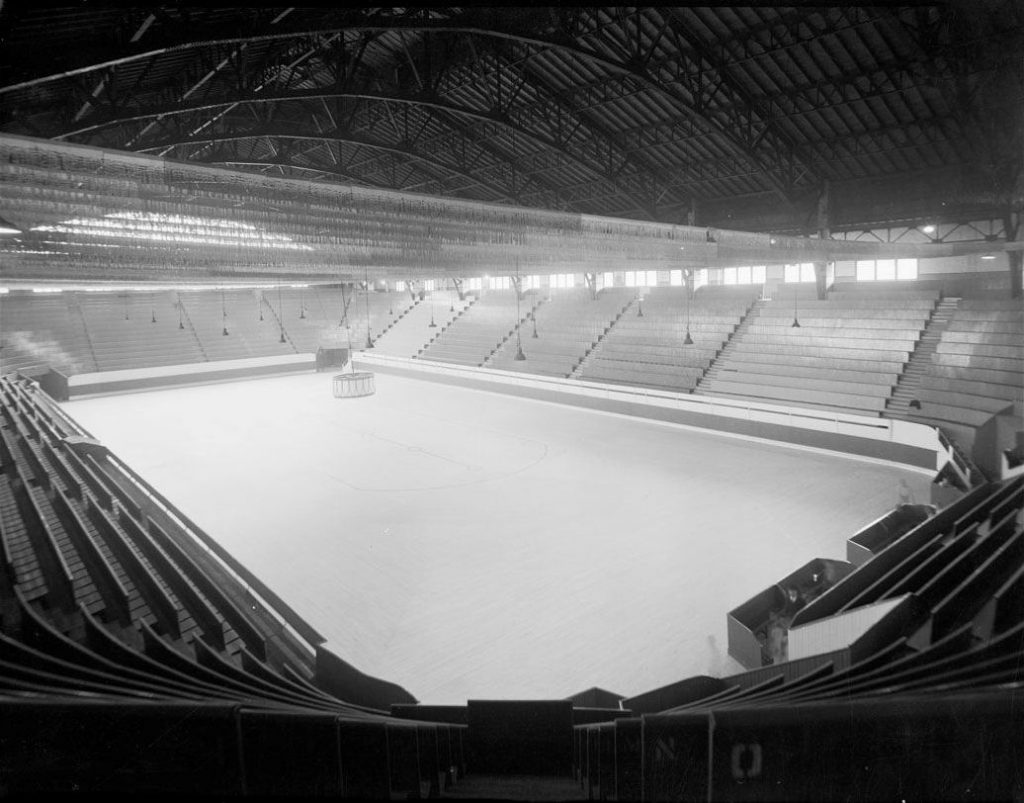
Following the match, the Montreal Wanderers had to quit the league because their home arena burned down, meaning only three Canadian teams – the Arenas, the Montreal Canadiens and the Ottawa Senators – competed in the full season.
The game, though, would prove to be just the beginning of one of the NHL’s highest-value hockey franchises — the Toronto Maple Leafs. In the 1917 season, the Toronto Arenas would go on to win the Stanley Cup after defeating a second Montreal team (the better known Montreal Canadiens) and then eventually the west-coast’s Vancouver Millionaires, who played in the Pacific Coast Hockey League.
For all the jubilation, the triumph was short-lived, as the team folded under financial pressures the following year. Only with the team’s revival as the Toronto Saint Pats in 1919 did the club become a favourite among Toronto’s large working class population. As Toronto continued to struggle to host a profitable franchise, the owners of Arena Gardens had to open the space to host political rallies, large-scale funerals, and even a pro-prohibition demonstration during the 1920s.
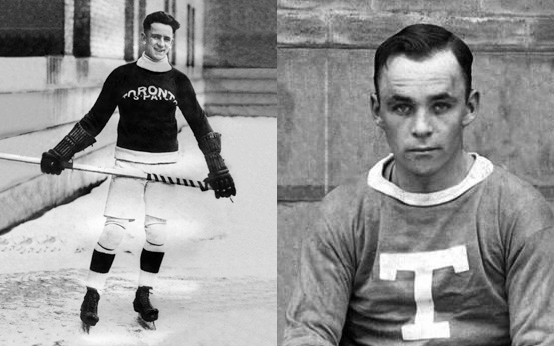
The Arenas produced some of the earliest Toronto hockey legends, including Corbett Denneny and Harry Cameron. Cameron became the first defenceman to score four goals in one game, and Denneny became the first to score six goals in one game, a feat matched by only a handful of other players.
In 1927, Conn Smythe, businessman and war veteran, raised funds to prevent the team from moving, and in doing so, named the franchise after the Maple Leaf regiment in the Canadian forces. Today, the Conn Smythe trophy is awarded annually to the NHL’s most valuable player.
Toronto’s First NHL Game and the Maple Leafs’ Unexpected Beginnings
Article
In 1933, an anti-semitic race riot during a baseball game left many injured—and foreshadowed a decade of persecution and violence.
It’s easy to imagine Toronto as removed from the violence of anti-semitism and the rise of Adolf Hitler, but on an August evening in 1933, the animosity that troubled the streets of Berlin emerged in Toronto during a baseball game at Christie Pits. Earlier in 1933, Adolf Hitler emerged as the winner of the German election with a populist platform that promised the return of good fortune and pride to Germany after a decade and a half of economic misery. The riot that ensued in Toronto was a reflection of the global spread of Hitler’s white supremacist views.
During a neighbourhood baseball game between the Harbord Playground team and another represented by St.Peter’s church a couple of days before the brawl, someone pulled out a white flag containing a swastika. The action mobilized supporters and opponents of the Nazi Party. Up to 10,000 people converged upon the park as the game suddenly became a platform for racial politics, and soon enough, young men brawled for over five hours in what the Toronto Daily Star called “one of the worst free-for-alls ever seen in the city.”
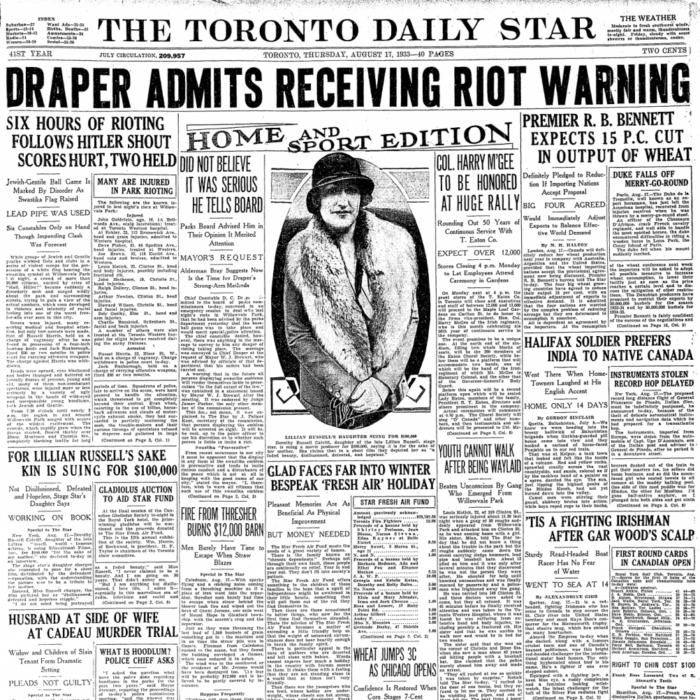
Stabbings and beatings forced several young men on both sides to go to Toronto Western Hospital, many of whom were simply bystanders drawn by the crowd. The Daily Star claimed that the violence was due in part to many in the crowd chanting “Heil, Hitler”, the common Nazi German salute, towards those the Germans had already begun victimizing.
That very year, Adolf Hitler kickstarted twelve years of persecution, violence and genocide against Jews, Roma, Jehovah’s Witnesses, homosexuals and political dissidents, though even his supporters could not have predicted the horrific extent of the Third Reich.
Even after using horses, billie clubs, and even exhaust smoke from motorcycles, the crowds at Christie Pits failed to disperse in an orderly manner. Only at 2am did the fighting begin to dissipate.
According to the Toronto Daily Star, “[h]eads were opened, eyes blacked and bodies thumped and battered as literally dozens of persons, young and old, many of them non-combatant spectators, were injured more or less seriously by a variety of ugly weapons in the hands of wild-eyed and irresponsible young hoodlums, both Jewish and Gentile.”
Recently, author Jamie Michael and illustrator Doug Fedrau published a graphic novel called Christie Pits, about the riots. The book examines both the events as well as the social climate of Toronto and Nazi Germany at the time.
Learn more about the Christie Pits riot through The Canadian Encyclopedia.
Toronto’s Christie Pits Riot
Article
Toronto’s TTC Has It’s Own Custom Typeface
Video
• 0:53
Toronto’s Subway Was Canada’s First Rapid Transit System
Video
• 2:00
The original pedestrian tunnels are built to connect Eaton’s buildings and, later, to link Union Station to the Royal York Hotel.
Toronto Has the World’s Largest Underground Pathway
Video
• 2:01
After a year of allowing very limited capacity, starting with guided Sunday afternoon bus tours, cyclists and hikers are granted their first access in 1974.
The Unexpected Evolution of the Leslie Street Spit
Video
• 0:55
The infamous Blizzard of ’99 brought the entire city to standstill, which pressured Mayor Mel Lastman to call in the army to help with snow removal. At the time, Canadians across the country heard the news and took the chance to make fun of that fact.
The Time Toronto Called the Army After an Ice Storm
Video
• 1:04
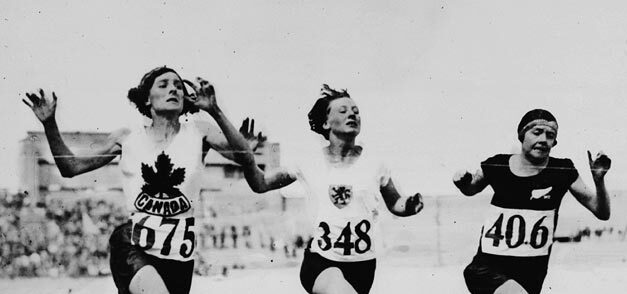
In 1928, Myrtle Cook McGowan broke a world record and led one of Canada’s great dream teams to Olympic glory.
Like Tom Longboat, Myrtle Cook McGowan rose from adversity to become one of the most important athletes in Canadian history. Not only did she break a coveted world record and win multiple Olympic medals, she turned Canadian women’s sport into an institution that could foster others like her.
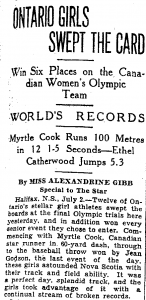
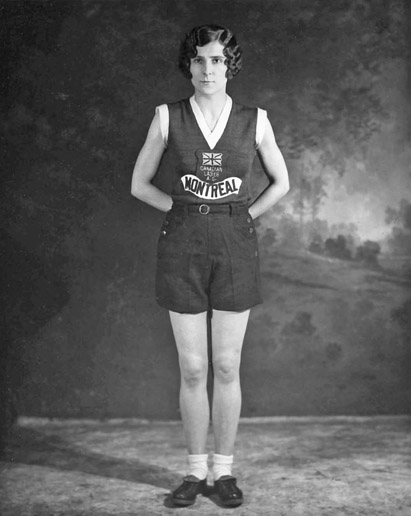
From an early age, Toronto-born Myrtle Cook McGowan dominated nearly every sport she competed in, and when she was only 15, she earned a spot on Canada’s track and field team.
Unfortunately, she would have to wait over a decade to compete in the Olympic Games, as women’s athletics did not appear in the competition until 1928. But when that day came, she would not only break the gender barrier, but she would run faster than any woman had done before. On June 2nd, 1928 in Halifax, Nova Scotia, she clocked her 100m sprint at 12.0 seconds, officially breaking the world record.
Two months later, her and five other women arrived at the 1928 Summer Olympics in Amsterdam — Jean Thompson, Ethel Catherwood, Bobbie Rosenfeld, Ethel Smith and Jane Bell, dubbed “The Matchless Six.” They went on to win the 4x100m relay race in resounding fashion. But, like any great athlete, it was McGowan’s actions off the track defined her legacy as a leader in Canadian athletics.
Before her rise to stardom, she founded the Toronto Ladies Athletic Club, the first of its kind in the country. Bucking convention, the athletic club offered McGowan and women in Toronto the opportunity to compete in sport and to represent themselves—as well as their country—as men had done previously. Years later, Toronto swimmer Marilyn Bell would do the same for Canadian aquatics when she became the first to swim across Lake Ontario.
The accomplishments of The Matchless Six brought celebrity status to the female athletes, who were featured on the front page of The Star as Canada followed their progress in the competition. After the games, 200,000 Torontonians reportedly gathered downtown to celebrate the athletes who triumphed in Amsterdam, including Cook.
While at the Olympic Games, McGowan provided the Canadian press with updates of Canada’s performance in athletics, a correspondence that lead to a career as a sport journalist for forty years. Her column, “In the Women’s Sport Light,” covered up-and-coming female athletes in various different sports, from skiing to swimming to baseball.
The Story of Myrtle Cook McGowan
Article
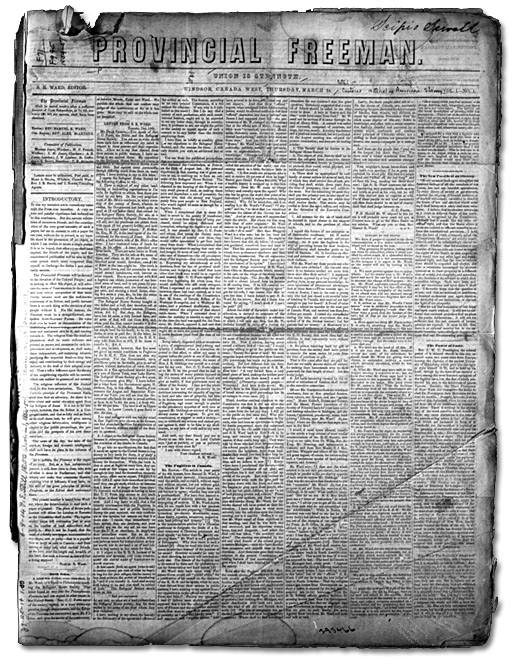
As creator & editor-in-chief of The Provincial Freeman, Shadd had her finger on the pulse of the Underground Railroad and used her paper to track escape attempts, follow legal challenges and fight against the slave trade.
Mary Ann Shadd Cary was the first Black woman to publish, edit, and run a newspaper in North America. This is her story.
As creator and editor-in-chief of The Provincial Freeman, Mary Ann Shadd had her finger on the pulse of the Underground Railroad and used her paper to track escape attempts, follow legal challenges and fight against the slave trade. The Freeman’s office was located at 143 King St. East.
Shadd became an important leader of the abolitionist movement in both Canada and the United States. While still in her 20s, she composed a pamphlet called “Hints to the Colored People of the North”, which implored free African-Americans to seek both physical and spiritual independence from the ideals of White America.
Citing a distrust of the American government (who permitted states to legalize/outlaw slavery), Shadd predicted the passing of the Fugitive Slave Act in 1850, a law that allowed for slaveowners to capture escaped slaves anywhere in the United States. Alert to the present injustices free Black men and women in the United States, she joined the famous 1851 North American Convention of Coloured Freemen, a gathering of Black intellectuals and community leaders who sought to provide resettlement solutions for escaping slaves.
An 1852 follow-up, A Plea for Emigration; or Notes of Canada West (1852), encouraged African-Americans to seek greener pastures in Canada, where Shadd established her small publishing fiefdom away from the United States.
A Plea for Emigration explored the agriculture, economy, labour sector and social life of Upper Canada, ensuring that any refugees traveling north would be prepared to seek employment—and advocate for themselves if faced with racial discrimination. Her view of Upper Canada was, for the time, rather optimistic:
“The general tone of society,” she wrote, “is healthy; vice is discountenanced, and infractions of the law promptly punished; and added to this, there is increasing anti-slavery sentiment, and a progressive system of religion.”
From her Toronto bureau, she urged free and captive African-Americans to seek refuge in Canada and offered guidance for those seeking to start anew in Upper Canada.
Shadd continued to publish the Freeman until 1859, and four years later, she left for the United States to work as a recruiter for the Union Army, who fought the Confederate Army in the American Civil War.
The Story of Mary Ann Shadd Cary
Article
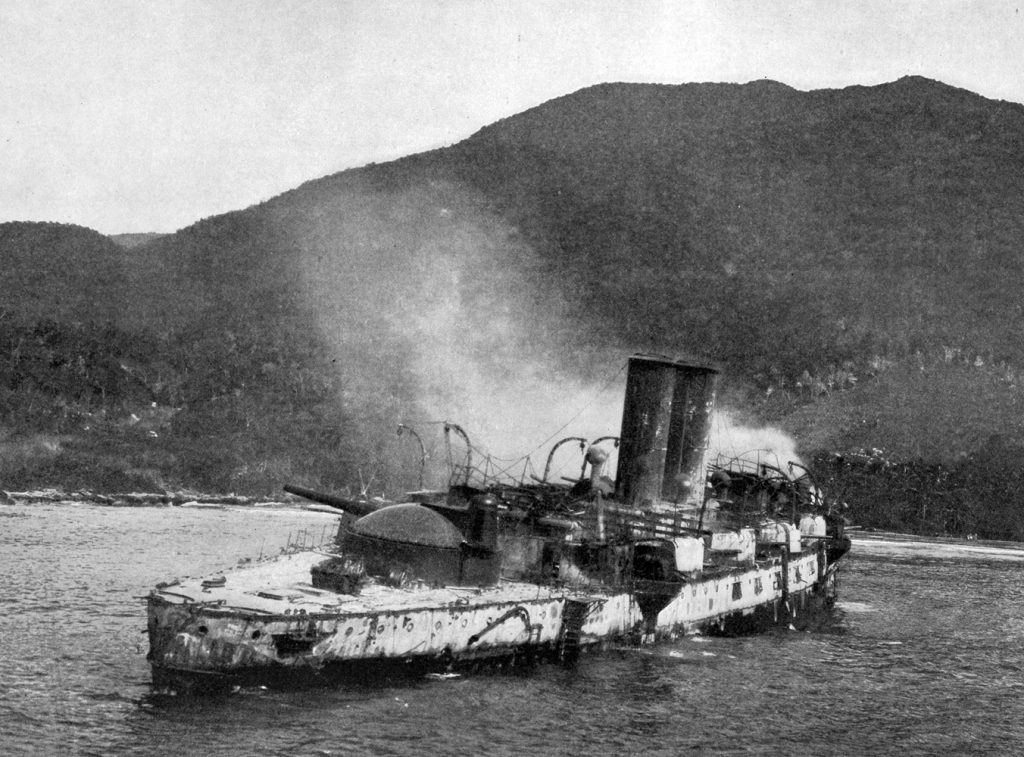
At the outbreak of the Spanish-American War, Kit Coleman talked her way onto a freighter bound for Cuba and scooped every male war correspondent with exclusive info about the combat.
Kit Coleman (1856-1915) was a journalist and leading war correspondent at the Toronto Mail & Empire. Though, Torontonians may remember Coleman for her witty commentaries on Toronto society.
After several years as a life columnist with her weekly “Woman’s Kingdom” segment, Kit Coleman fought endless detractors on her way to becoming an international reporter. In her “Woman’s Kingdom” column, she offered a unique, almost sarcastic take on Toronto society and those who demanded advice from her syndicated news column.
While still a columnist, Coleman ventured into reporting. In 1898, After taking an overnight train to Washington D.C., she attempted to sail with American troops to follow military maneuvers in light of the sinking of the Maine, an American battleship. When refused, she instead boarded a freighter and sailed to Havana, giving her crucial information about the the Spanish-American war. Once Toronto’s Mail and Empire published the story, she officially became the first ever female war correspondent.
For her actions and her prolonged commitment to both reporting and social criticism, Coleman earned the admiration of Sir Wilfrid Laurier, Prime Minister at the time. Not only did she become one of the leading journalists in Toronto, she also became an important figure for the few female journalists in Canada and North America.
When Kit Coleman and all other female journalists were refused a press passes for the St. Louis World’s Fair in 1904, she produced a list of 13 others, and in doing so, composed the blueprint for what would later be known as the Canadian Women’s Press Club. Serving as president of the club, she noted:
I think we press women ought to get up a club or an association of some kind and try to meet once a year. I don’t suppose we would claw each other too awfully and a little fun might be got out of our speech-making.
The History of Toronto’s Kit Coleman
Article
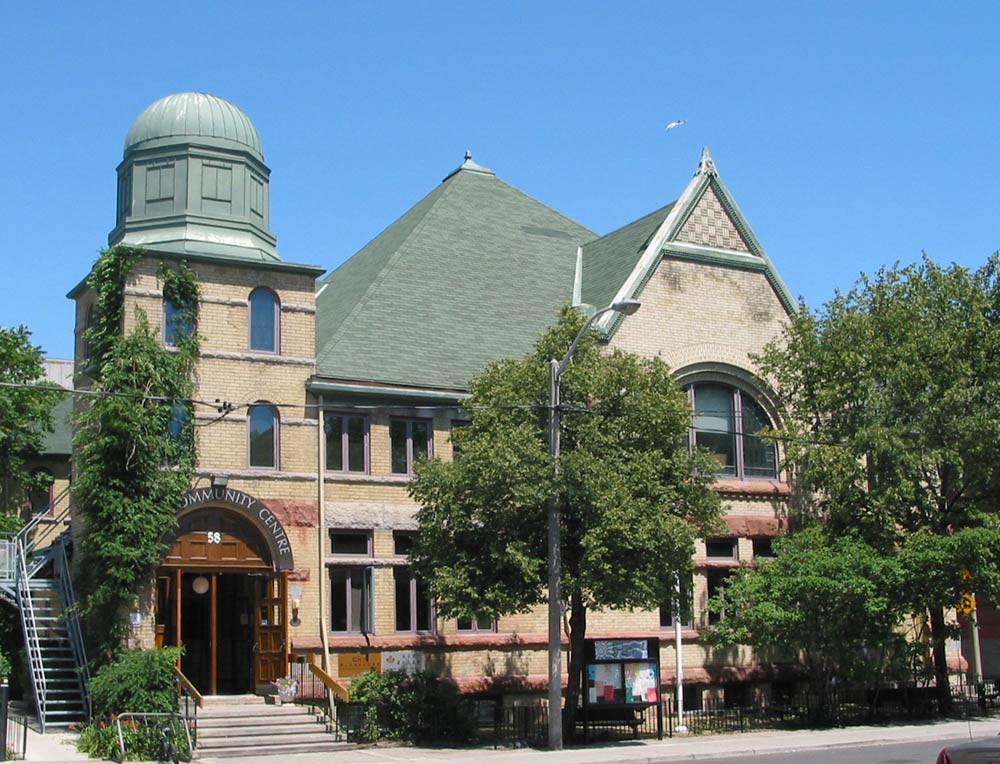
Located in Chinatown at 58 Cecil Street, the centre serves the catchment area from Bathurst Street to University Avenue, between Bloor and Queen Street West.
Let’s explore the significance of Toronto’s Cecil Community Centre, a building that has adapted to the surrounding neighbourhood for over a century.
Located in Chinatown at 58 Cecil Street, the centre serves the catchment area from Bathurst Street to University Avenue, between Bloor and Queen Street West. This area includes many distinctive neighbourhoods like Chinatown West, Kensington Market, Alexandra Park, and Harbord Village. Since 1978, the centre has had the mission to “foster a sense of community and enhance the quality of life through the development, encouragement and support of programs and activities responsive to local needs.”
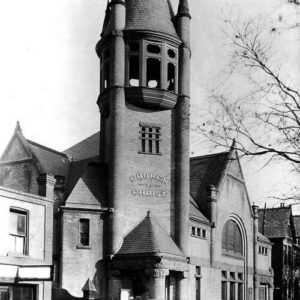
The Cecil Community Centre’s building has a rich history reflective of the ever-evolving neighbourhood around it. Built in 1890 by architects Knox and Elliott, it was originally the church of the Protestant congregation of the Church of Christ. Toronto’s Jewish population rapidly grew in this area between 1900 and 1930, and the building was sold in 1922 to the Polish Ostrovtzer congregation. It became a synagogue and the bell tower that originally adorned the roof was converted to a dome. In order to raise money for the purchase of the building, the congregation received donations from community members; their names were commemorated in gold Hebrew lettering on two large marble plaques installed at the inauguration of the synagogue, which are still in the lobby of the centre today. For decades, the Ostrovtzer Synagogue played an important role in the lively Jewish community of the neighbourhood.
During the 1950s and 60s, the Chinese population of Toronto established roots around Dundas and Spadina after the near-total destruction of the first Chinatown for the construction of Toronto’s new city hall. At the same time, Jewish residents were moving to other neighbourhoods. During the mid-60s, the building at 58 Cecil Street became the Chinese Catholic Centre, acting as a religious hub and offering help for new immigrants to the area. Its congregation grew to have members from all over the city and it eventually relocated to a different area.
Then, in the early 70s, the building became the headquarters for one of Toronto’s earliest gay rights groups, the Community Homophile Association of Toronto (CHAT). CHAT used the building as offices and as a space to hold events, conduct public education, offer support services such as drop-in sessions and counseling phone lines, and many other activities for the local gay and lesbian community. CHAT also hosted many early Pride week events, such as panels and art exhibits, and was the starting point of Toronto’s first gay pride march in 1972. In 1973, CHAT moved their operations to a new location on Church Street.
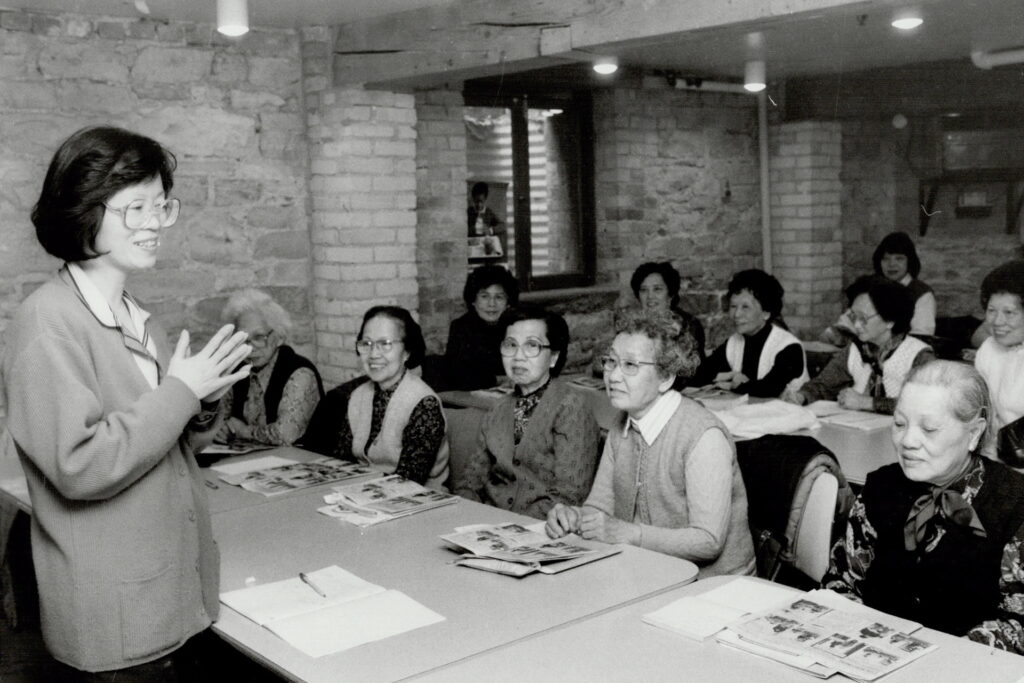
Finally, in the late 70s, the city acquired the building at 58 Cecil Street and it became the Cecil Community Centre. Operating now for over four decades, the centre caters to kids, youth, adults, and seniors through camps, educational workshops, health and fitness classes, language classes, tax clinics, and so much more. They serve diverse neighbourhoods and offer a welcoming space inclusive of racialized, low-income, homeless, and LGBTQ+ peoples to increase connection and foster community. As many of their programs have had to be canceled or moved online due to the pandemic, the centre continues to serve its community; in late May of this year, the centre hosted a Covid-19 vaccine clinic with volunteer translators, live music, and lion dancers!
As the neighbourhood around 58 Cecil Street has changed over the last century, the building has changed with it. Its adaptable nature is reflected in the Cecil Community Centre’s mandate to provide responsive programs to local communities. The building has played an important role in being a space for development and connection, whether as a church, a synagogue or a headquarter for a social justice group, and this legacy is continued today through the centre.
The History of Toronto’s Cecil Centre
Article
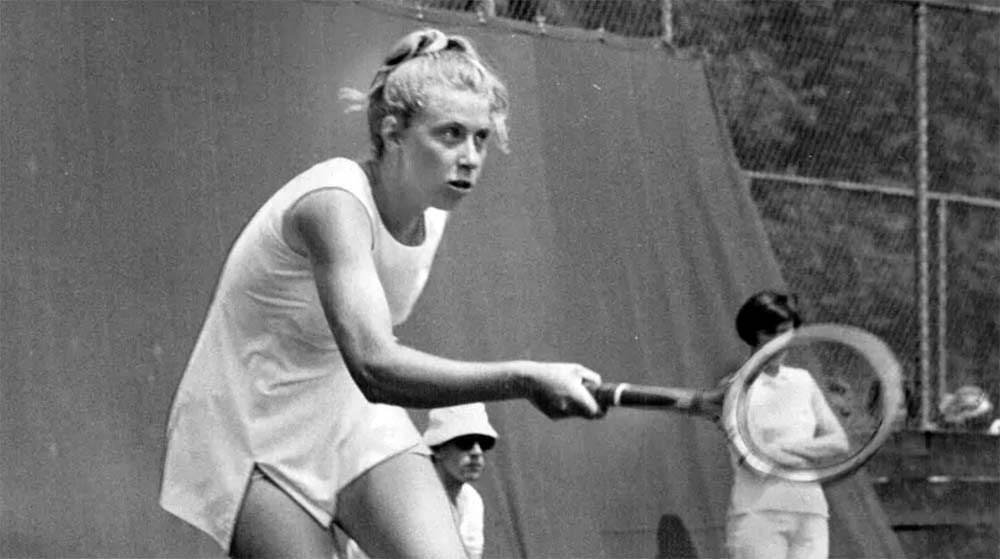
When Mississauga native Bianca Andreescu won the Canadian Open, she became the first Canadian to win the tournament in 50 years. The last to do so was Windsor-born Faye Urban-Mlacak in 1969.
Toronto has a long history of celebrating tennis talent. The Canadian Open, also known as the National Bank Open (formerly Rogers Cup), is the third oldest tennis tournament in the world, only behind Wimbledon and the U.S. Open. This is the history of tennis in Toronto — told through the many lives of the Canadian Open.
It takes place in North York, and before that it had a home at the Toronto Lawn and Tennis Club. The inaugural men’s tournament took place in 1881 and the women’s in 1892. At the time, the Club was located at 149 College Street.
Today, the tennis tournament draws global attention to Toronto. While it began as an amateur tournament in Toronto, the cup has had many non-Toronto locales in its lifetime. In its early days, it had a home at the Queen’s Royal Hotel at Niagara-on-the-Lake — being played there 14 times between 1895 and 1914.
The tournament also toured the country for a few decades between the end of World War I and 1968, visiting places such as Winnipeg and Vancouver.
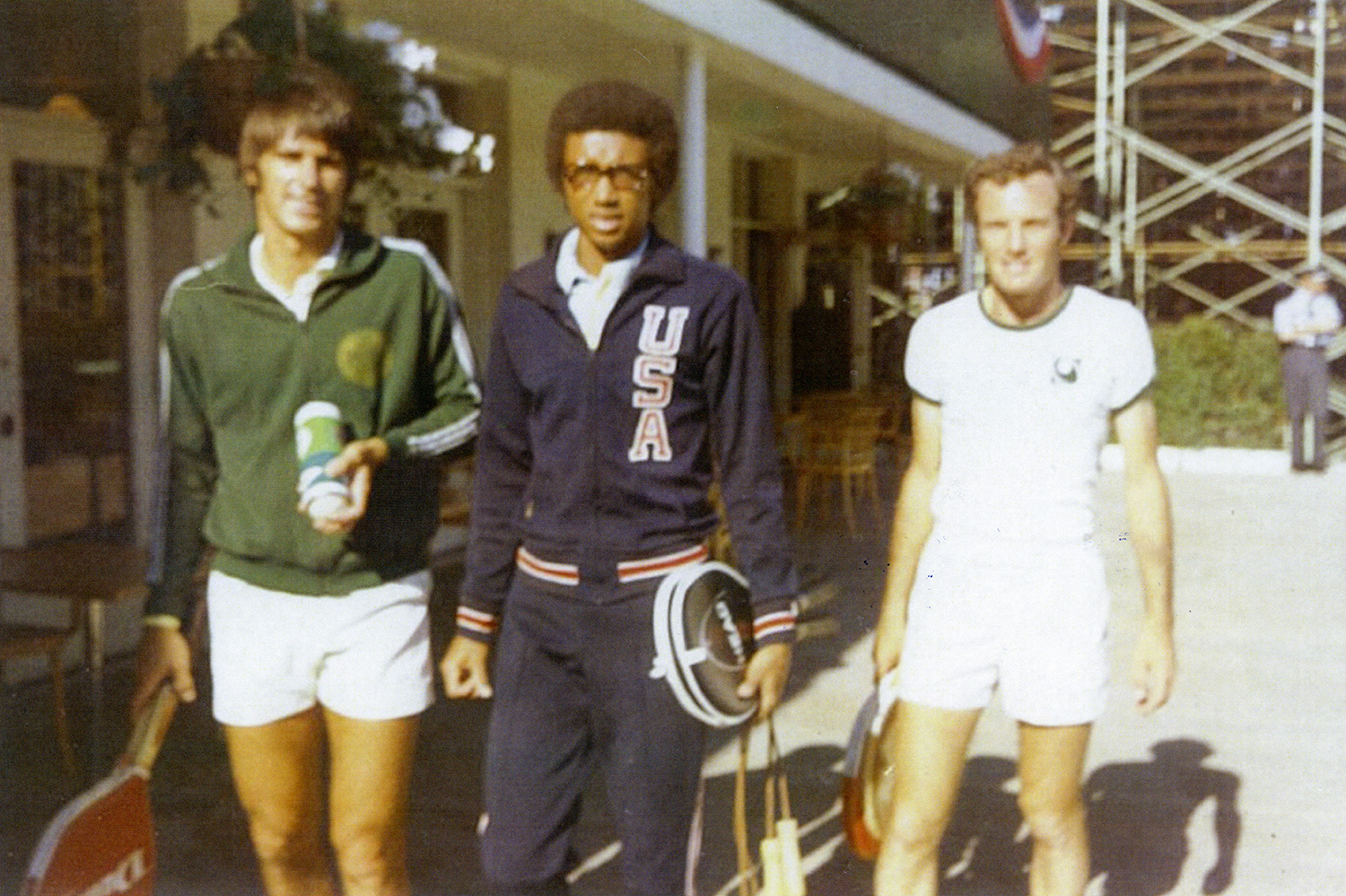
It was 1968 when it returned home to Toronto, this was also the first year that it was opened to professional tennis players. In the years to follow, the tournament would rotate between the Toronto Lawn and Tennis Club and The Toronto Cricket, Skating and Curling Club, hosting legendary players like Arthur Ashe, Chris Evert and Bjorn Borg.
In 1976, the National Tennis Centre was built and elevated Toronto and the Canadian Open even further as a tennis destination. In the 1980s greats like Boris Becker and Martina Navratilova graced the courts, and 1982 was the year that the Canadian Open’s men and women’s tournaments began rotating time between Toronto and Montreal.
In 2004 the National Tennis Centre was replaced by the Aviva Centre (formerly the Rexall Centre) with its first match between Andrew Agassi and Tommy Haas was played to a crowd of 10,500 people. Since then legendary players like Federer, Nadal, Halep, and Serena Williams have all taken home the prize.
Toronto has much longer history of championing tennis than you may think. From local players to international pros, Toronto has been elevating the tennis community for decades.
The History of Toronto as a Global Tennis Hub
Article
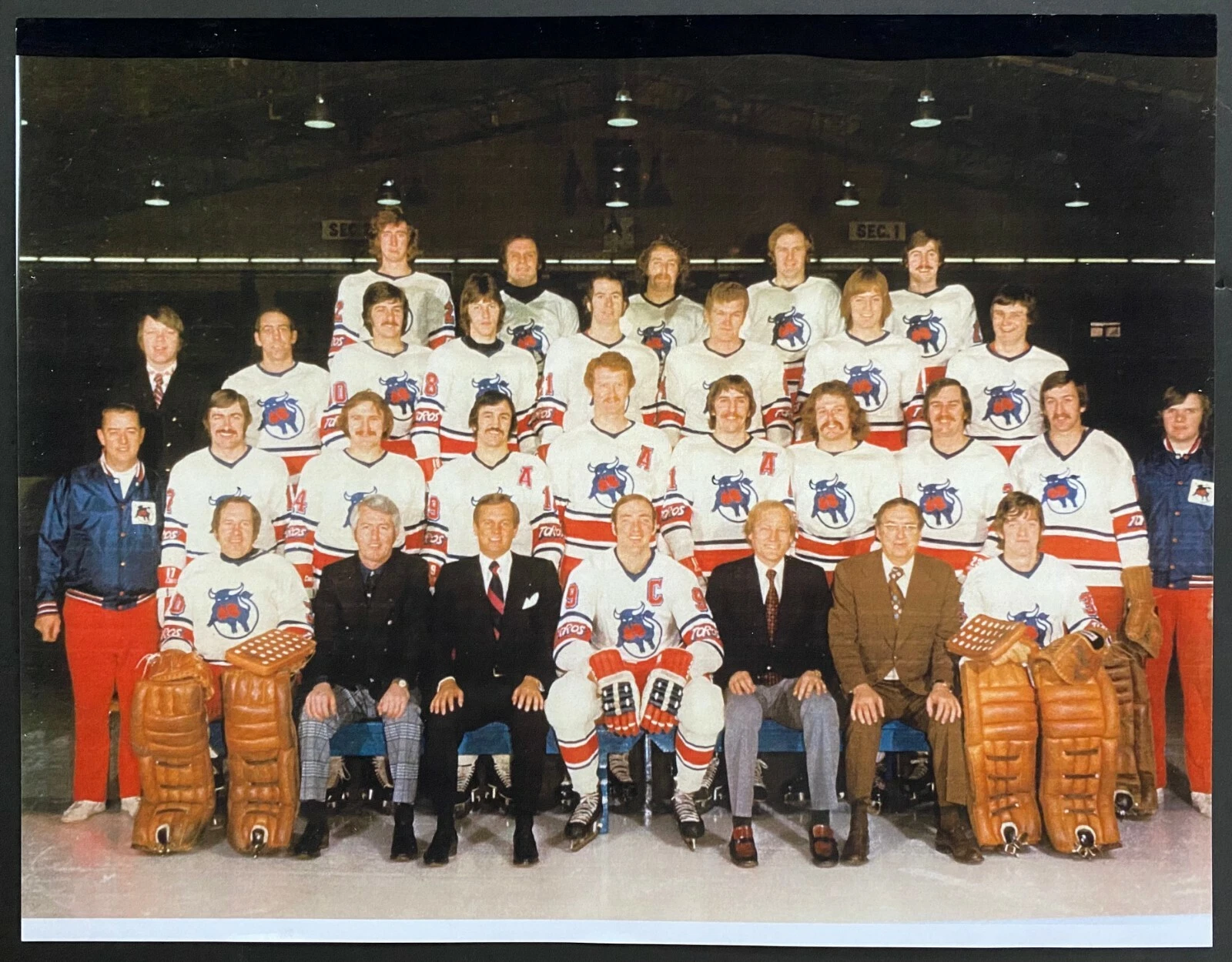
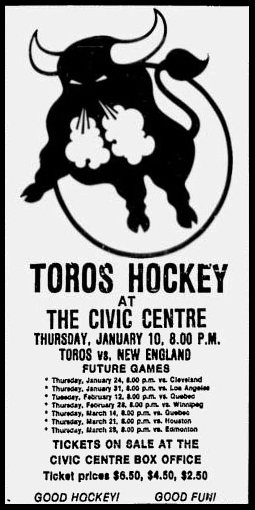
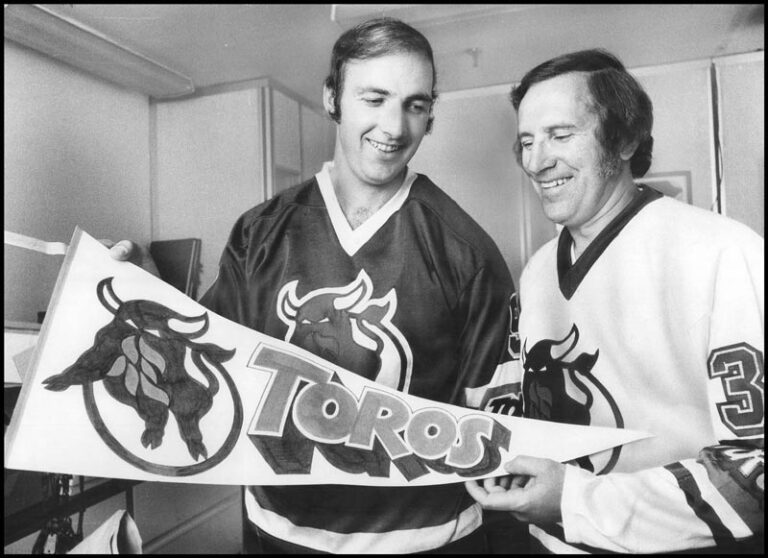
Most people who think of Toronto and hockey will immediately think of the Toronto Maple Leafs, but for a moment in this city’s history, a team named the Toronto Toros laced up their skates, scored some goals, and made a mark.
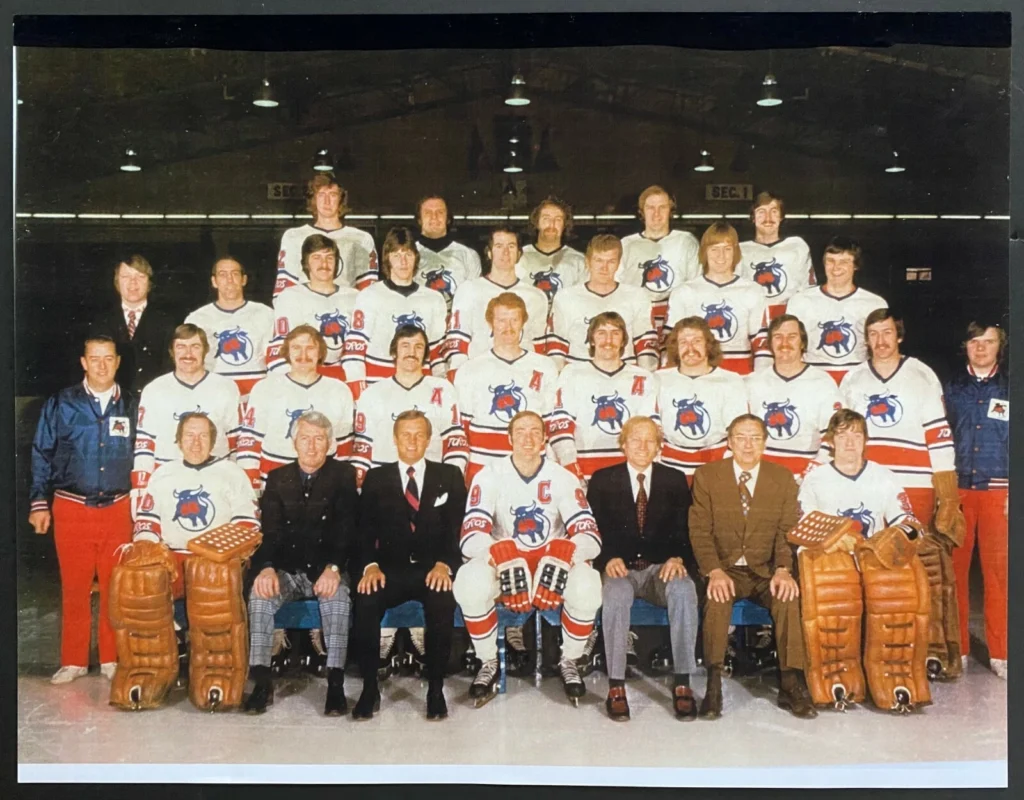
The World Hockey Association (WHA) had its inaugural season in 1972 and ambitiously established itself as a competitor to the National Hockey League (NHL) by trying to be more accessible to fans and players. For fans, they would bring teams to mid-level markets in Canada and the United States. For players, they would offer higher salaries and offer fewer restrictions than the NHL such as, the reserve clause, which in effect bound players to the same team for their entire careers, which would lure in NHL players such as superstar, Bobby Hull.
One of the markets the WHA established a team in was Ottawa after the WHA granted Doug Michel the right to own a team in Ontario. Originally it was thought that Hamilton would be the destination, but the franchise landed in our nation’s capital. After an inaugural season that saw the Ottawa Nationals rack up debt mainly caused by poor attendance, the team folded and was sold to John F. Bassett. Bassett would bring the Toros to Toronto, who were already home to not just a team, but a Toronto institution in the Maple Leafs.
So how do you compete with such a beloved franchise? For The Toros, a big part of their push was to connect a team to the city, and they’d do so by going local, investing resources in players who had a connection to Toronto.
A 1973 advertisement posted in the Toronto Star would state that,
“The Toros are an eager, aggressive, hard skating group of young hockey players. Almost every one of them has more than just a playing interest in Toronto, because they’re Toronto and district boys. Players who have a desire to win for Toronto because they are Toronto.”
The Toros would play their first season at Varsity Arena, which bothered Maple Leaf and Maple Leaf Gardens owner, Bill Ballard and his son Harold. Ballard, who unsuccessfully bid for the franchise, also wanted The Toros to rent the Gardens. Toros owner John F. Bassett declined the invitation explaining to the Globe that he’d “…rather play somewhere else, even with less seats, where we could establish ourselves. When people think of the Gardens they think of the Leafs.” Unfortunately, that snub from Bassett would eventually come back to bite the Toros.
The Toros would play their first season at Varsity Arena, which bothered Maple Leaf and Maple Leaf Gardens owner, Bill Ballard and his son Harold. Ballard, who unsuccessfully bid for the franchise, also wanted The Toros to rent the Gardens. Toros owner John F. Bassett declined the invitation explaining to the Globe that he’d “…rather play somewhere else, even with less seats, where we could establish ourselves. When people think of the Gardens they think of the Leafs.” Unfortunately, that snub from Bassett would eventually come back to bite the Toros.
In their first season the Toros franchise would “light the lamp” both figuratively and literally, making it all the way to the conference finals. The Toros quickly reached a point where they outgrew the 4,900 capacity Varsity Arena. Their success as a team saw them end up playing their playoff games in Maple Leafs Gardens.
The following year Bassett would move past his initial hesitation for the team to play in Maple Leaf Gardens, and relocate there for more room. They would add Hall-of-Famer Frank Mahovlich and 1972 Summit Series hero Paul Henderson to their roster. The Toros would return to the playoffs, and their success would continue drawing larger crowds. While the team was poised for continued success, drama behind the scenes took hold.
As The Toros sought out an arena to fight their growing fan base, Harold Ballard, who resented the WHA, charged The Toros excessive rent, removed the bench cushions before their games, and denied them access to the Leafs dressing room, making them build their own dressing room instead. This made life difficult, and ultimately was the beginning of the end for the young franchise. Many people said Ballard had a bone to pick with the team because of his unsuccessful bid for the franchise, other reasons people cited was the Toros aggressive pursuit of Toronto Maple Leaf players and the mere existence of the WHA.
In the end, a mixture of high rent, players leaving, and dropping attendance would lead to the Toros curtain call, and in 1976 they would relocate the Birmingham, Alabama and be renamed the Birmingham Bulls.
The WHA itself stuck around until they merged with the NHL 1979. The merger brought in teams such as the New England Whalers (who became the Hartford Whalers, and now the Carolina Hurricanes), the Winnipeg Jets (now the Phoenix Coyotes), the Edmonton Oilers, and the Quebec Nordiques (now the Colorado Avalanche).
The History of the Toronto Toros Hockey Team
Article
Caribana and its main event, the Grand Parade, has grown so much since its humble beginnings.
The History of Caribana & the Grand Parade
Video
The CNE Once Showcased the Future of Technology
Video
• 2:31
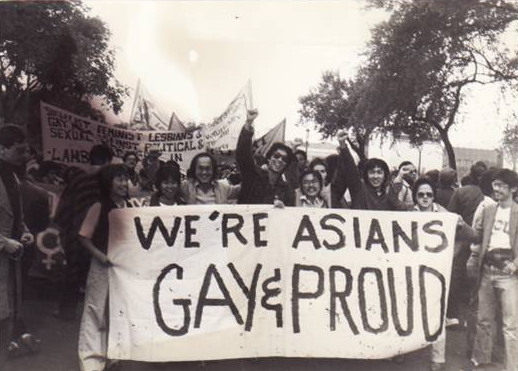
Disclaimer: “both GAT and Orientations use a lesbian and gay framework. Since then, sexual and gender identities and the politics around them have shifted and continue to morph as new possibilities become available. Today’s non-heterosexuals are as likely to refer to themselves as queer, non-binary, trans, bisexual and two-spirit”.
Richard Fung, 2018
Founded by Richard Fung, Gay Asians of Toronto (GAT) was one of the city’s earliest organizations to represent the queer Asian community. The history of GAT plays an important part in understanding queer history in Toronto.
Inspired by the Third World Conference of Lesbians and Gays, organized by the coalition of Black Gays in Washington D.C. (1979), Fung saw the need for representation of the queer Asian community in Toronto and founded the organization. In 1982, GAT led the Toronto Pride Parade in Grange Park which is located near the city’s West Chinatown despite opposition from City Hall. This choice to start the parade close to Chinatown West was to demonstrate their resolve as a marginalized group where there was immense disapproval from many in the Asian community. GAT strived for inclusivity, creating a network for their members to feel belonging and a place to support one another.
With overlapping social struggles of race, expression of identity and acceptance, GAT brought attention to the many issues queer Asian Canadians face regarding intersectionality. The organization has collaborated with many different queer community groups in the city such as Zami, the first queer Canadian group for Black and West Indian folk, Khush, a collective of queer South-Asian men and women and what is to be known as Asian Community AIDS Services who are still active today. These organizations all revolve around the same mission of representing queer Asian Canadians.
“As gays, we have to fight for our rights in the straight society, but Asian gays, like black gays, Jewish gays, sexual minorities, and the handicapped among us and every other minority within the minority have other battles to face as well.”
– Alani Li, GAT member.
Richard Fung, the founder of GAT, is an artist and professor at the Ontario College of Art and Design (OCAD) for Integrated Media and Arts. His professional work includes an extensive and acclaimed list of films showcasing the intersection between identity and culture. Since GAT continued to become increasingly active during the 1980s to the early 2000s, as an artist, he explored these themes of culture and identity through documentary. Being born in Trinidad with a Catholic upbringing, the merge of many factors of his identity have been the subject of his films. The range of topics he has touched upon in his work have involved colonialism, immigration, racism, homophobia, justice in Israel/Palestine, men in porn and more.
“The social and racial hierarchies my mother had been brought up with were already crumbling, in a formal sense, by the time I came of age. These hierarchies of race and class, though not so fixed or monolithic, persist today. The tape looks at the two of us; it’s about place, people’s place in society.” Richard Fung, In My Mother’s Place (1990)
With his debut independent film Orientations: Lesbian and Gay Asians (1986), Fung captures the different lives of 14 queer Asian individuals experiencing racism, sex and the troubles of expressing their cultural identity. The film travels through a series of interviews with those belonging to different Asian backgrounds and a glimpse into their daily living experiences being queer
“Fung made Orientations as a pioneer project to counter the complete absence of video or film documentary on gay and lesbian Asians. As such, he describes it as an “educational tool,” and its straightforward style foregrounds the sensitive, articulate people whose interviews make up the bulk of the video. Fung admirably avoids whitewashing his subjects and presents them with contradictions intact to avoid stereotyping the minority he wishes to liberate.” (Cinema Canada,1985)
In another acclaimed film depicting Fung’s relationship with health, Sea In The Blood (2000) becomes a personal documentary following his living experience navigating through his late sister’s fatal illness and partner’s first symptoms of AIDS. The tension of kinship and self identity are themes that become explored throughout the film. The dichotomy between these two themes demonstrate the heavy pressure the queer Asian community is under when it comes to traditional values. The film takes viewers through the implications of the AIDS epidemic and acceptance of an ailing family member.
“In the 1970s, lesbian and gay activists mostly saw themselves outside, often in opposition to, the state. But with the success of gay rights and the urgencies of the AIDS crisis, much LGBT organizing and infrastructure have since become tied to government funding and foundations. Today, anti-homophobia and anti-transphobia education, peer counselling and even community development have largely shifted to AIDS service organizations (ASOs)”. Richard Fung, 2018
Read more on Richard Fung:
Re:Orienting Queer/Asian/Canadian
By Richard Fung
https://doi.org/10.3138/topia.38.81http://www.richardfung.ca/
Richard Fung and the History of the Gay Asians of Toronto
Article
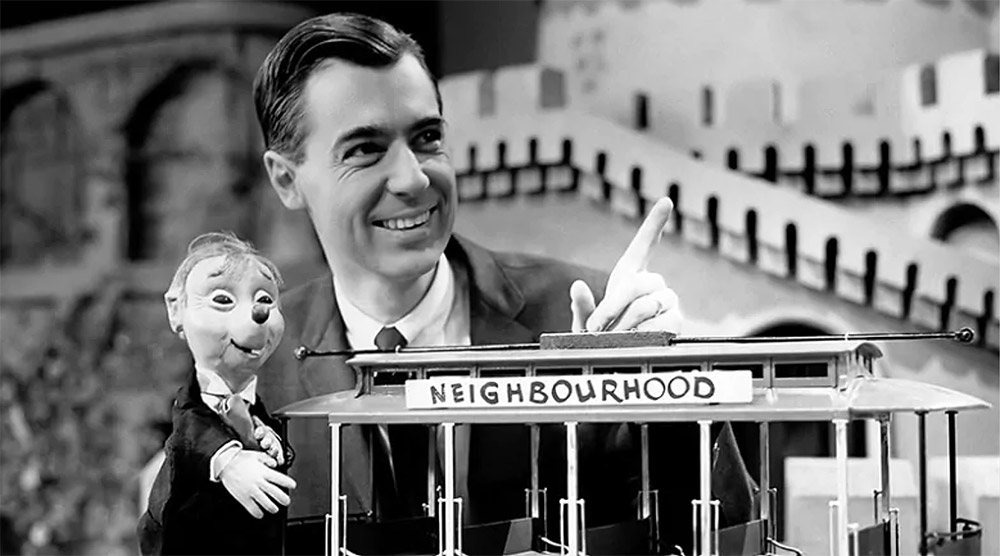
Mister Rogers’ Neighborhood is one of the most celebrated children’s TV shows to ever air. Lucky us, our favourite friendly neighbour is closer to home than you might think.
Mister Rogers Neighborhood was broadcast by National Educational Television (NET), which later became the Public Broadcasting Service (PBS) from 1968-2001. However, did you know that years before it was named Mister Rogers’ Neighborhood the show was known as Misterogers? Did you also know that it was produced by the CBC and was filmed in Toronto? Yes, the ‘neighborhood’ broke ground up North in 1961.
“The day after graduation, I had a call from Dr. Frederick Rainsberry in Toronto who was then head of children’s programming for the CBC. He said, Fred, I would like you to do a program for our network. I said, you can’t imagine what a voice from heaven you are to me right now because I really didn’t know what I was going to do. I could have accepted a parish ministry job. But I felt that this was a ministry in itself. So I did a daily program”.
(Fred Rogers interview with Terry Gross, NPR, 1984)
That phone call led to a little road trip from Pittsburgh, where he worked behind-the-scenes on television show, The Children’s Corner, to Toronto. He wouldn’t travel solo though, bringing a puppeteer named Ernie Coombs with him. Coombs would eventually become fondly known as, Mr. Dressup.
For four years and 337 episodes, Fred Rogers would cut his teeth in Toronto. Behind the scenes no longer, Rogers used his time here to further develop his voice and format.
In 1964 Rogers got the rights to Misterogers and headed back to Pittsburgh to further develop it. Coombs however wouldn’t head back with him, as Rogers convinced the CBC to give him a show. What Rogers did take back with him was a Toronto made trolley, castle, puppets, and invaluable learnings from his time in our city.
Mr. Rogers’ Neighborhood would make its US national debut on February 19, 1968 and for thirty years, Rogers would become a familiar visitor to millions of children.
Mister Rogers’ Uniquely Torontonian Origins
Article
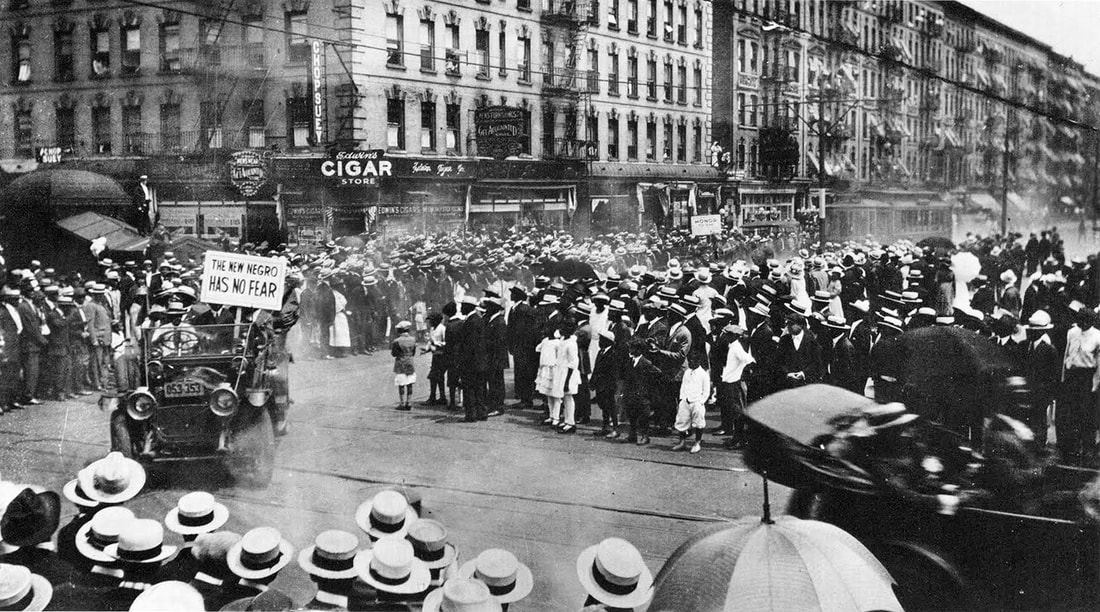
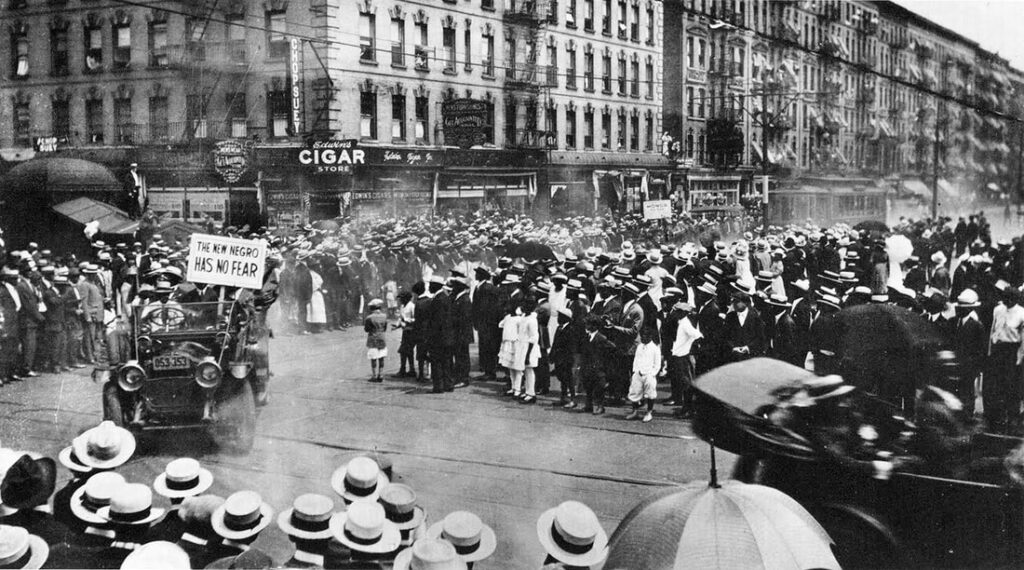
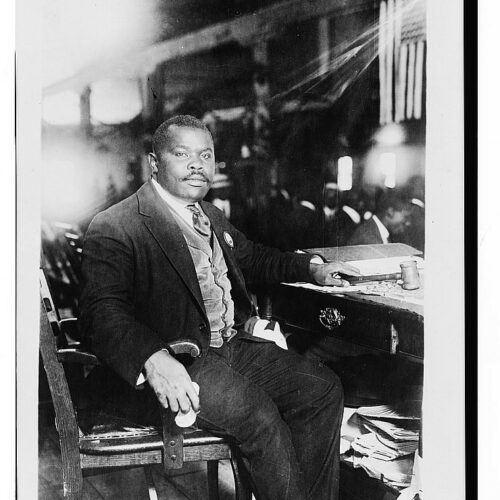
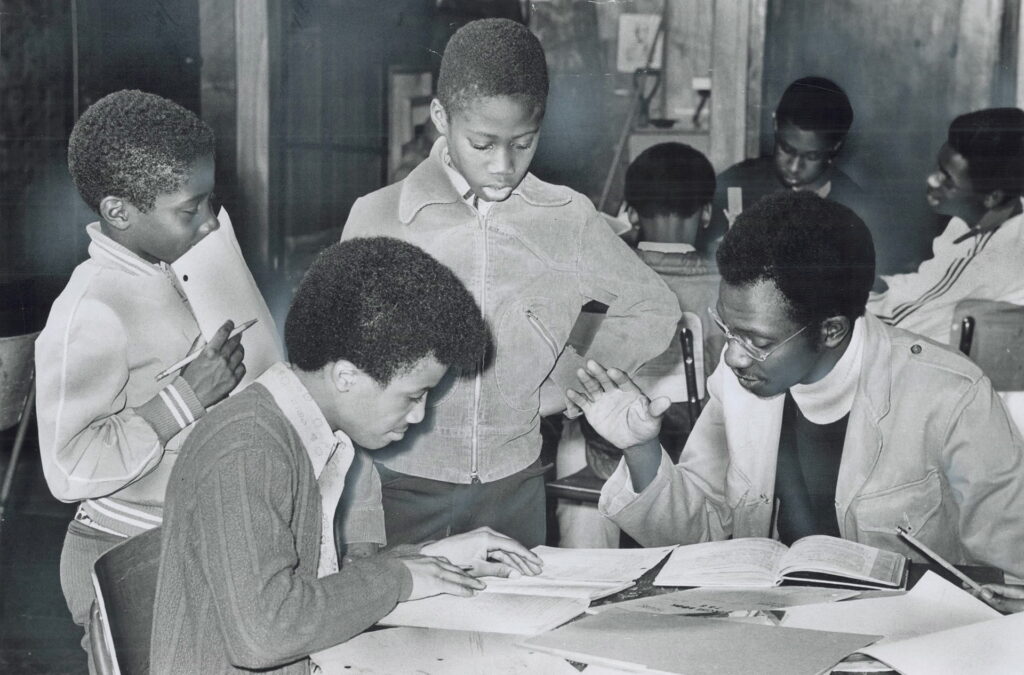
On the 80th anniversary of the Slavery Abolition Act of the British colonies, Marcus Garvey founded the Universal Negro Improvement Association and African Communities League (UNIA-ACL) on August 1, 1914. The UNIA was founded to spur the movement for the empowerment, solidarity, and unity of people of African descent worldwide, including here in Toronto.
Garvey believed in political and economic independence to advance the conditions of Black people globally in order to combat the lasting consequences of the trans-atlantic slave trade and ongoing anti-Black racism. Garvey himself was a leading figure of the Pan-African movement, which encouraged a return to Africa for people of African descent and an end to neo-colonial rule on the continent. Pan-Africanism is based on the idea of a shared history and a common destiny for those of African ancestry.
While Garvey’s vision and unrelenting efforts led one of the first movements to unite Black people internationally, he has received criticism, during his life and still to this day, for promoting unrealistic ideals and holding problematic beliefs. Garvey’s belief in the independence of people of African descent was rooted in racial separatism, the idea that different races should form physically and geographically separate nations. This idea was criticized by many, including contemporary Black leader W.E.B. Du Bois and others at the National Association for the Advancement of Colored People (NAACP), who advocated for interracial efforts towards justice. Moreover, Garvey’s wish for a return to Africa was rooted in colonial and fascist ideals; his wish for the creation of a Black nation was motivated by wanting to reproduce empires such as the Roman and British Empires.
Born in Jamaica in 1887, Marcus Garvey founded the UNIA in Kingston, Jamaica, at the age of 26. In 1916, the UNIA’s headquarters were moved to Harlem, New York, in order to gain momentum for the organization. Garvey’s ideas picked up steam, and UNIA divisions started rapidly opening in various cities across North America. Sources vary about the location of the first UNIA division in Canada, but it is generally understood that a division was founded in Cape Breton, Nova Scotia, in 1918 to support West Indian migrants working in mines. Other divisions rapidly followed; the Montreal branch opened in June 1919. In Toronto, the desire for an organisation to unite Black people in the face of rampant systemic racism had existed for a few years already.
Garvey often cited that Hitler and Mussolini’s actions were modeled from the UNIA’s nationalist goals, and even held anti-semitic beliefs himself. Garvey’s historical context and the prevalent ideologies of the time informed his beliefs, although we can recognize that they were as harmful back then as we understand them to be now. Many of Garvey’s followers didn’t agree with all that he promoted, or didn’t believe his goals to be literal. It is widely understood that the philosophy of Garveyism and the ensuing movement became much more than Garvey himself. Marcus Garvey’s ambitions towards Black pride and pan-Africanism created a strong race consciousness, kindled a universal sense of purpose, and gave rise to a legacy that inspired and empowered generations of Black people all over the world. Many Black leaders were inspired by his movement, such as Martin Luther King Jr., Malcolm X, and Bob Marley, and the legacy of Garveyism in uniting Black people is undeniable.
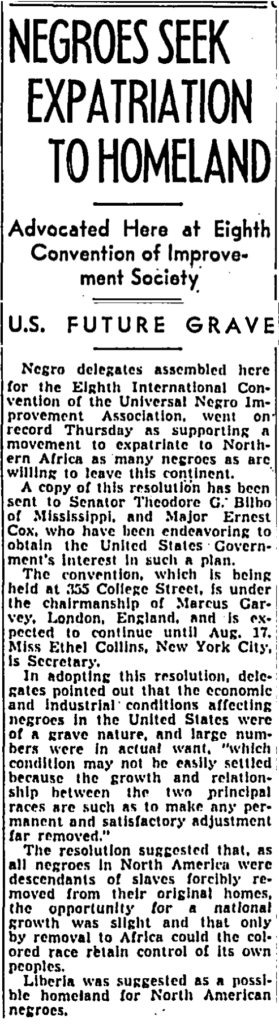
In April 1919, the Coloured Literary Association was founded by a few West Indian men; they would meet in the back room of Occidental Cleaners and Dyers store at 318 Spadina Avenue. Several months later, a charter was obtained from the UNIA headquarters in Harlem, and the Toronto UNIA division was officially founded on December 1, 1919. In its early days, members met at the Occidental Hall at the corner of Bathurst and Queen Street West, which later became a concert hall for many years and is now a CB2 store. Before finding permanent headquarters, UNIA meetings were held in a rented space at 339 Queen Street West, which is now an Arc’teryx store. After fundraising for many years, members were finally able to purchase a building at 355 College Street in 1925, which remained the UNIA’s until 1982 and later became the long-time location of reggae bar Thymeless. At its peak, the Toronto division had around 200-300 members working towards solidarity and independence, engaging in politics, celebrating culture, and fostering what remained a community hub for decades.
By the early 1920s, the UNIA had over 1100 divisions worldwide in North, Central, and South America, the Caribbean, Africa, and Australia. In Canada alone, 32 divisions spanned the country from Nova Scotia to British Columbia, encompassing around 5000 members, or approximately a quarter of the Black population of Canada at the time. Strong diasporic connections and a cultural and political understanding of Pan-Africanism meant that the majority of Canada’s UNIA membership was made up of West Indian and Afro-Caribbean people. Many UNIA members in major cities such as Toronto and Montreal also worked as railway porters; they facilitated the expansion of Pan-Africanism and the UNIA across Canada and the northern United States, strengthening transnational networks along the way.
Although the UNIA was headquartered out of the United States, it had a wide-reaching system of connections around the world. Canadian UNIA divisions were especially involved in the development of the organization; many Canadian members participated in larger UNIA affairs by attending annual conventions, hosting international events, and contributing to the UNIA’s global newspaper, The Negro World. Marcus Garvey spent considerable time in Canada over the years to develop the UNIA’s operations, spread his message, and foster support for the Pan-African movement. He toured around the country in the late 1930s, and based his operations out of Toronto during this time due to legal issues in the United States.
The Toronto division had a very significant role in the UNIA’s global network. UNIA regional conferences were hosted in Toronto in 1936-37, and Garvey attended the annual Big Picnic in St. Catharines in 1938. As an Emancipation Day celebration, the Toronto UNIA organized the Big Picnic every year from the 1920s to the 1950s. The picnic drew thousands of attendees from Ontario and New York state every year, and remained a key gathering for Black communities for decades. Garvey also founded the School of African Philosophy in Toronto in 1937, a course he taught at the local division in order to educate future UNIA leaders. In Garvey’s own words, spoken during a speech given in Windsor, Ontario that same year: “I am trying to make everyone a Marcus Garvey personified. The new leadership of the U.N.I.A. shall be by and through men and women who have been particularly trained […] on the scope and the work of the U.N.I.A.” Garvey emphasized that “[t]he purpose of the U.N.I.A. is to emancipate and our primary duty is to emancipate your minds because it is the mind that makes the man, that directs him.”
One of the most memorable speeches he gave during this time in Canada was immortalized in Bob Marley’s ‘Redemption Song’. The song contains the lyrics “Emancipate yourselves from mental slavery; None but ourselves can free our minds,” paraphrased from a 1937 speech Marcus Garvey gave in Sydney, Nova Scotia. The title of the song also refers to the Garveyist goal of African redemption.Garveyism and the UNIA took hold in Canada at a time where Black people were denied entry, inclusion, and opportunity in many spaces due to widespread racism and inequality. Liberty Halls, where UNIA divisions were based, became political meeting places and cultural hubs amongst Black communities. Outside of church, halls were some of the only spaces where large groups of Black people could congregate, organize, and celebrate. They served to create networks to relieve housing and employment discrimination, and were used as spaces to hold meetings, bazaars, dances, classes, clubs, plays, concerts, and much more. Liberty Halls across North America provided spaces where entertainment, culture, politics, and mutual aid came together. For instance, Toronto’s Liberty Hall was home to the United Negro Credit Union, while also being a regular venue for entertainment; jazz musician Archie Alleyne played at the 355 College Street Hall many times over the years. Violet Blackman, a former member of the Toronto UNIA, expressed the active nature of the organization: “Everyday of the week there was something going on up in the UNIA.” Marjorie Lewsie, another former member, remembers, “We all used to meet at the Hall […] and it was a lot of fun.” These insights make it easy to understand how halls remained significant focal points in Black communities for decades.
Many of the UNIA’s goals, such as fostering empowerment and solidarity, were realized through various auxiliary groups that offered opportunities for advancement, education, skill-building, and community care to its members. The Universal African Legion was an auxiliary group for men with a militaristic focus on discipline and protection. The Juvenile Branch was created to cultivate leadership for youth members. One of the most popular auxiliary groups was the Black Cross Nurses (BCN), an organisation for Black women inspired by the Red Cross. The BCN didn’t provide professional training; Black women were barred from studying nursing in Canada until the late 1940s. However, it allowed Black women to develop skills, promote health and hygiene, and provide care to their communities in many ways. Women in the BCN created informational pamphlets and newsletters, answered calls, visited sick community members, and helped new mothers with childcare, among other initiatives. The BCN in Toronto even sent medical supplies to Ethiopia during the Second Italo-Abyssinian War of 1935-36, showing that their focus on community care transcended borders. Nursing was seen as one of the most respectable careers for women at the time because it demonstrated traditional gender roles and ideals of womanhood through nurturing and maternal values.
The UNIA gave Black women the opportunity to gain respected skills and exemplify these values at a time where pursuing nursing professionally was denied to them in Canada. The Universal African Legion had a similar purpose; it empowered Black men by allowing them to embody traditional gender roles as protectors and defenders. The halls and their auxiliary groups were central to maintaining the growth and safety of individual Black communities while strengthening global solidarity between UNIA divisions.
Marcus Garvey and the UNIA
Article
John and Jemima Howard deed their 165-acre country estate to the City of Toronto, which would eventually become High Park.
High Park’s Fires Help Toronto’s Nature Thrive
Video
• 2:17
For over 100 years, the Canadian National Institute for the Blind (CNIB) has been a global leader in advocacy and professional development for people who are blind or partially sighted. To last a century as an organization is no small feat. And, CNIB has done so while providing blind and partially-sighted Canadians with professional training, one of the world’s largest libraries of alternate format materials, and tailor-made linguistic technologies.
The story of CNIB is one of humble beginnings, of a wounded soldier and his friends who turned tragedy into hope and of a library that not only preserved literacy but advanced it through the development of writing systems and technology-assisted reading.
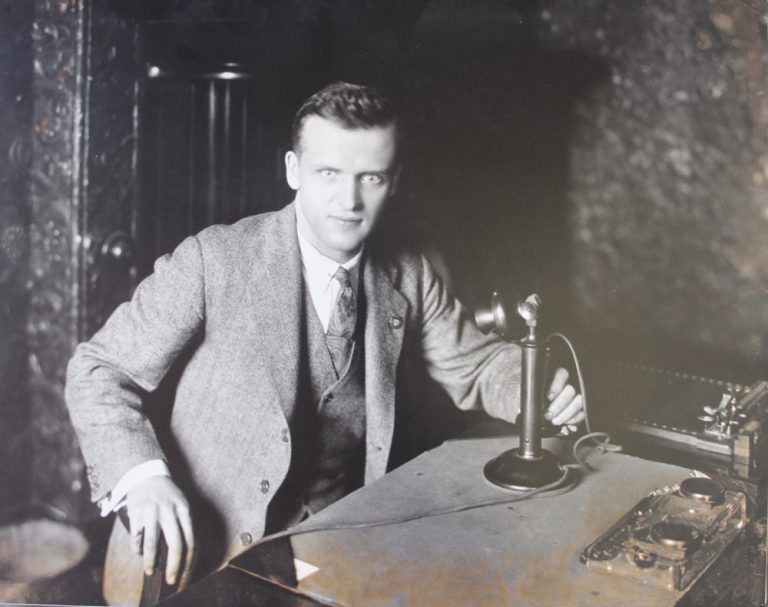
Born in Collins Bay, Ontario, Edwin Albert Baker grew up with full vision and went on to study engineering at Queen’s University. As an industrious graduate, Baker enlisted as an army engineer to assist Canadian forces on the Western Front just as the calamitous First World War began to pick up steam. In the French town of Ypres, flanked by sporadic gunfire in packed, muddy trenches in one of the most violent theatres of the war, a German shell exploded in his midst, and a sniper’s bullet subsequently blinded him.
“A German star-shell lit up the desolate landscape,” he said. “I remember wondering if there was any possible chance of the enemy being able to see us. I think the last thing I saw was that bright, floating star shell for, as I watched, a bullet smashed through the bridge of my nose and left me to the mercy of the darkness and my friends.”
After his injury, Baker began his recovery at St. Dunstan’s Hostel in England. For someone as motivated as him, the prospects were dire; at the time, people who were blind or partially-sighted were considered unfit for work and were rarely considered in any professional capacity. Fortunately, Baker’s caretakers understood that conventional methods of rehabilitation wouldn’t suffice given the amount of wounded coming from the Western Front.
Soon enough, Baker took to typing and regular office duties, and eventually, he mustered the courage to try rowing and even fencing. The experience proved transformative for Baker, and in 1916, the 24-year old returned to Toronto, poised to improve opportunities for visually-impaired persons around the world.
The First World War was, by any stretch of the imagination, a calamity for all parties involved. With millions dead and many more wounded, sick or traumatized, rehabilitative medical services became necessary for communities to treat and heal the working-aged men who suffered on the battlefield. Part of this imperative included treatment of post-traumatic stress disorder (PTSD), known then as “shell shock,” for countless soldiers who returned home. For Baker, who once thought he had lost the ability to make an honest living, helping those in a similar situation regain their pride and livelihood was not just an act of charity but an act of necessity.
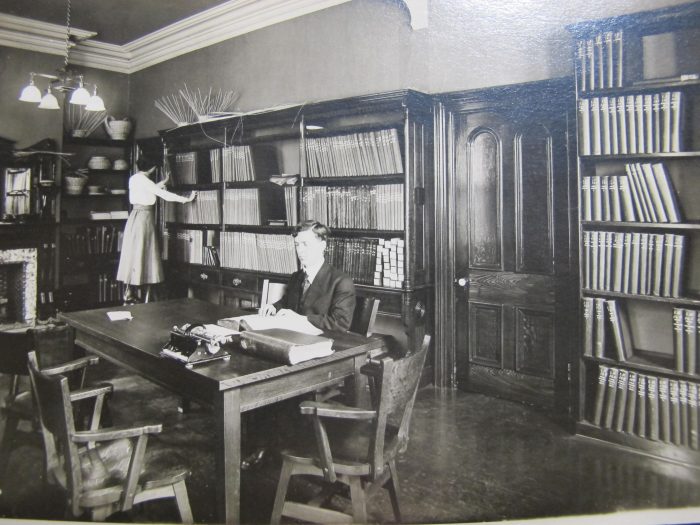
CNIB founding story is owed to Baker’s ambition, as well as the efforts of local advocates and organizations that laid the foundation for the institute. Since 1906, the Canadian Free Library for the Blind had possessed a collection of embossed literature and had already been offering library services from various locations in Toronto. But, given the size of its collection and the number of war veterans returning with full or partial visual impairment, the post-war era provided an opportunity for the Library, with the help of Baker, to institutionalize its support of the blind community.
During the First World War, the Library participated in fundraising efforts, including further assistance for those blinded during the 1917 Halifax Explosion that killed over 2,000 people and left hundreds with eye injuries. Baker, working in tandem with the Free Library for the Blind’s Sherman Swift, knew something needed to be done to extend their services beyond the library.
“A desire is now apparent,” said Swift, “to create an organization of a truly national character, whose duty it shall be to co-ordinate effort, to prevent overlapping, to conserve energy, to make possible the free exchange of ideas, to secure necessary legislation, and to collect money for the assistance of the cause in all parts of the Dominion.”
With its foundation, CNIB became one of the world’s first accredited organizations for improving the lives of people impacted by blindness, and for decades, the Free Library, renamed the Canadian National Library for the Blind, technically remained Canada’s only national library of materials for people with vision loss.
Baker, Swift, and the rest of CNIB continued to improve both the collection of reading materials and general access to a variety of media. For example, as radio became one of the primary forms of communication during the 1920s, CNIB pushed the government to provide a free radio license, batteries, and equipment to Canadians who are blind. Similarly, they increased the production of Canadian books, along with a selection of embossed readings in multiple languages.
In 1949, Baker took his work a step further and founded the World Council for the Welfare of the Blind, an international, multi-agency group that brought many advocacy groups for people who are blind under the same umbrella. Today, they are still based in Toronto and are called the World Blind Union.
What is perhaps most foundational, however, is that CNIB worked for decades to develop and iterate machines, hardware and software to best service people who are blind or partially-sighted. Long before technology companies like Google and Apple developed mobile and desktop applications for assisted reading, CNIB rigorously tested audio players and typing machines. Some of them, like the Octophone and the Readophone, proved to be catastrophic blunders, but phonographs and audio tape players provided many decades of reading opportunities.
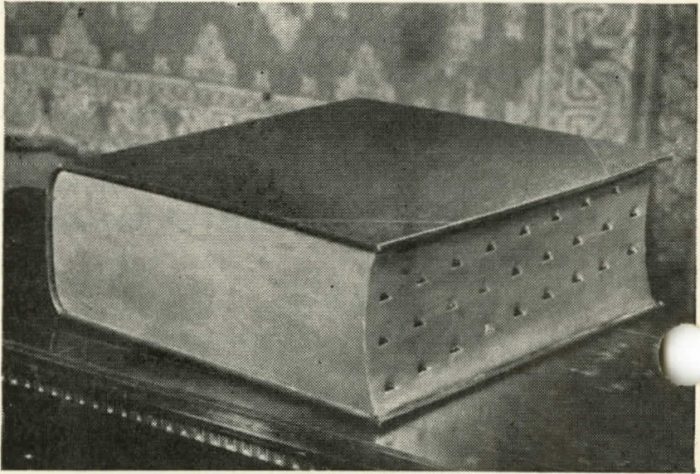
On the other hand, CNIB also tested more successful, cutting-edge equipment like the IBM Braille Embossing Machine, which allowed for the mass-production of Braille books using plates. And in 1976, famous inventor and futurologist Ray Kurzweil introduced the reading machine, a device that could scan and read books aloud. For his efforts, Kurzweil received the CNIB’s Winston Gordon Award, “recognizing his achievements in significant technological advances benefitting people with vision loss,” according to the CNIB website. The foundation’s ability to introduce and implement innovative technology is nothing short of remarkable, and with each step, has refuted the notion that visual impairment is a disability.
In 2016, they joined with Canadian public libraries to create the Centre for Equitable Library Access in providing improved access to information across Canada, and today, CNIB continues to advocate for literacy through collaboration and innovation.
Photography and historical background provided by:

Edwin A. Baker and the CNIB’s Torontonian Origin Story
Article
Before cannabis became legal across Canada, one Toronto man’s court case changed everything.
Cannabis Legalization Started With One Man in Toronto
Video
• 2:37
We spoke with the Niagara Military Museum’s Jim and Kathy Doherty about the exhibit, and some of the stories and people we all should know.
Black Military History of Niagara
Video
• 2:57
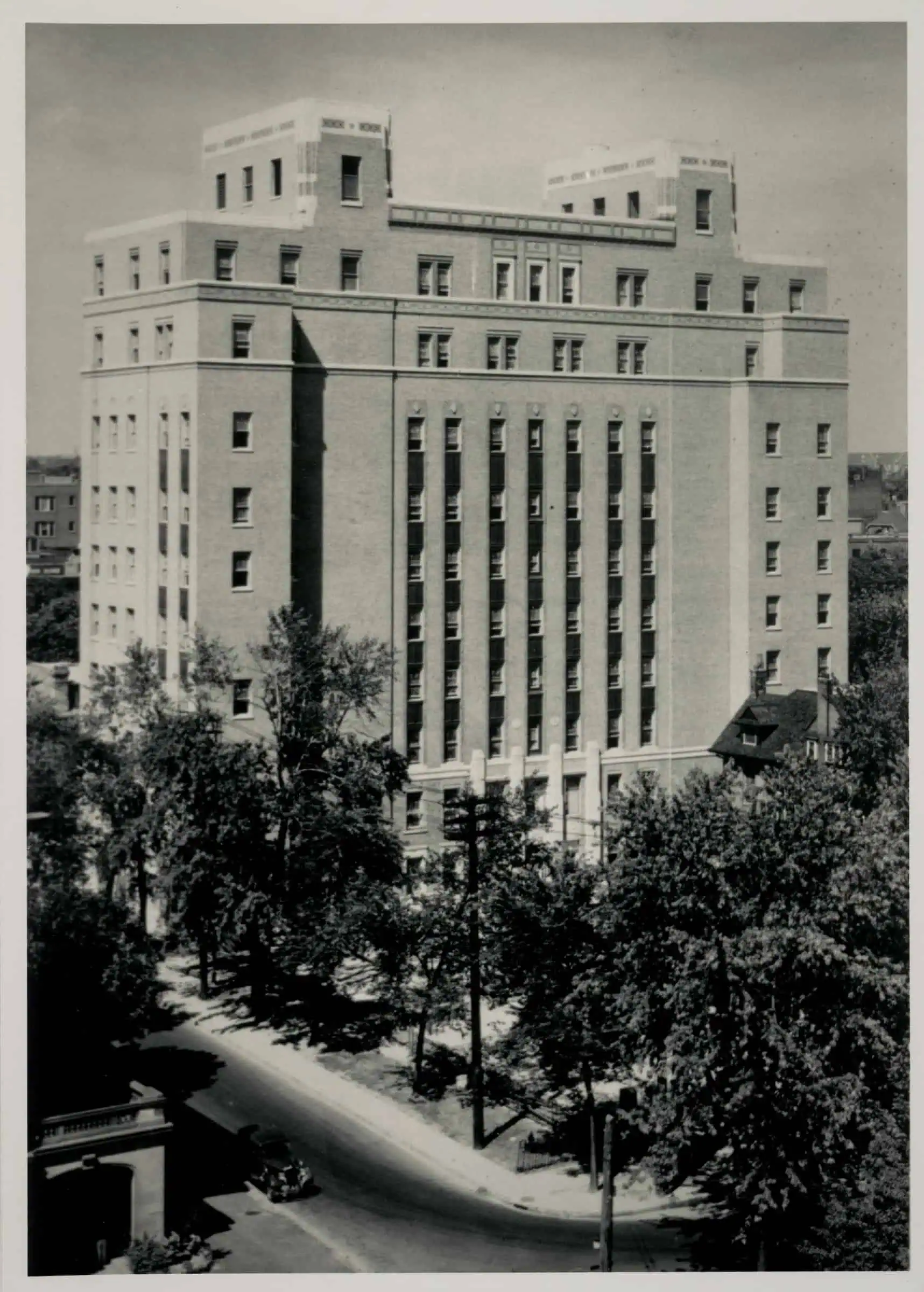
How nursing students at Women’s College Hospital broke down barriers and paved the way for the future of Toronto nursing.
The history of Women’s College Hospital was founded for the necessity of women’s medical care and education. The institution formed in 1883 when Dr. Emily Stowe, the first woman physician to practice medicine in Canada, called for a school to train women in medicine. With the backing of Toronto Women’s Suffrage Club, Stowe’s call led to the creation of Women’s Medical College. Throughout the early 20th century, this institution expanded geographically and logistically into a modern teaching hospital that prioritizes women’s health — becoming the Women’s College Hospital (WCH) we know today.
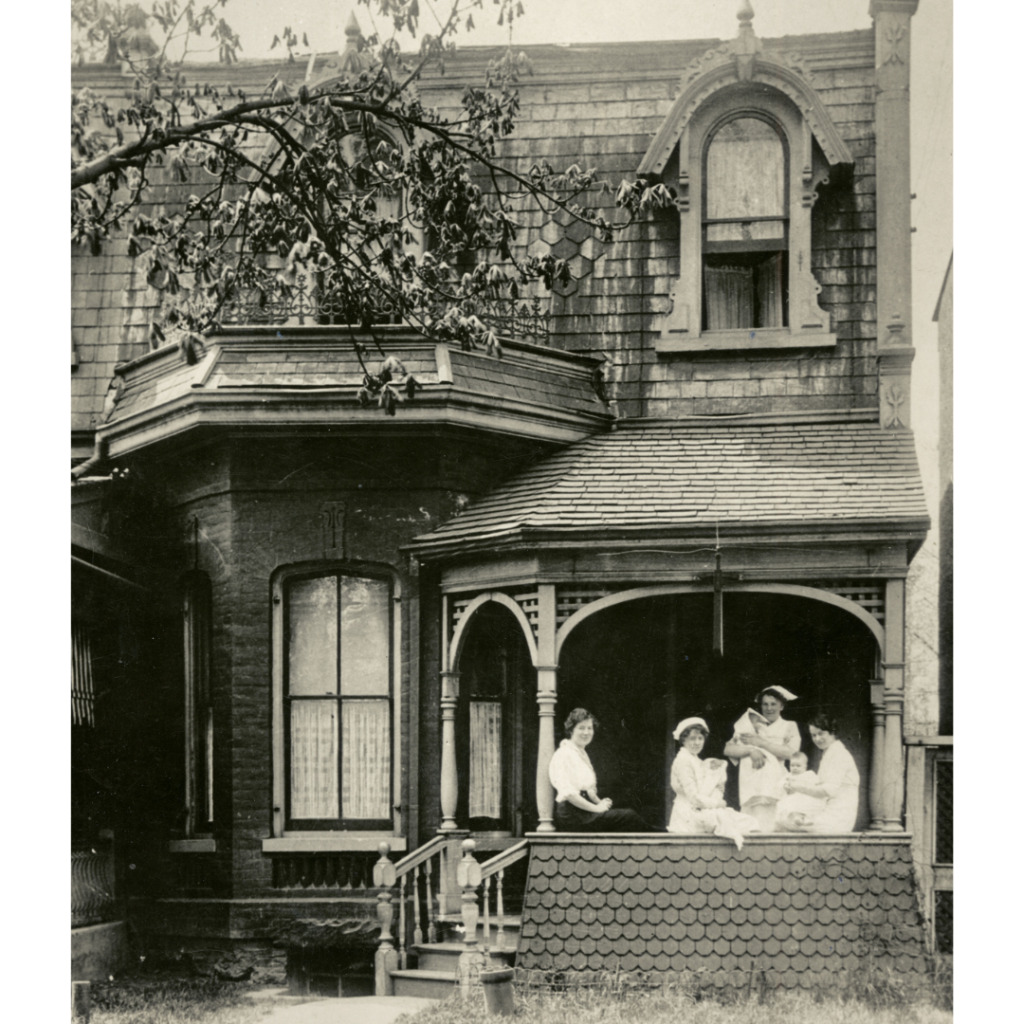
A crucial part of Women’s College Hospital history is the WCH School of Nursing. At the time that the School of Nursing saw its first student, WCH was operating out of a 3-storey house at 125 Rusholme Rd. The first student’s graduation included a handmade certificate and a brief ceremony in the backyard of the home. With this quiet beginning, the WCH School of Nursing went on to operate for 60 years and graduated nearly 1500 women.
Historically, nursing in Canada (and beyond) was largely shaped by Victorian ideals of respectability and femininity. As a predominantly feminized profession, nursing was constantly fighting to secure its place in the medical hierarchy. These pursuits of professionalization and respect led to improved medical education for nurses; however, it simultaneously fed discriminatory practices to exclude nursing students who were not white.
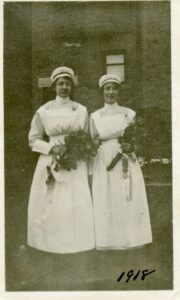
These concerns with nursing’s reputation contributed to the, often unwritten, discrimination against women of colour. Early brochures for the WCH School of Nursing stated that “women of superior education and culture” were preferred. While the WCH School of Nursing was attempting to dedicate its work to women’s medical education and care, this vision excluded Black women for over 30 years.
World War II caused a period of rapid transformation for the profession of nursing as more women entered the workforce. The war caused shortages of medical interns, allowing the need for and responsibilities of nurses to rise. The government supported massive recruitment campaigns and Black women were gradually accepted into nursing programs.
Following WWII, a young Agnes Clinton who had previously been rejected from other nursing schools for being “too tall,” applied to nursing school at WCH in 1948 and was accepted the same year. She would later become the first Black woman to graduate in 1951. While Agnes broke through discriminatory barriers and became an extremely accomplished nurse, little is known about her life or experiences at WCH Nursing School.
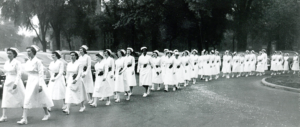
The general absence of historical materials about Black Canadian nurses should not go unnoticed or unchallenged. As a result, we must work harder to recover information documenting their experiences. Archival sources confirm the presence of Black nursing students at WCH and in nursing schools across Canada. For example, you can spot Agnes Clinton in this 1951 photo of the traditional graduation march from WCH to Convocation Hall at the University of Toronto.
Nursing school was a unique 2-3 year experience of training and living with your fellow classmates. These stories of learning and socializing help both confirm Black nurses’ presence and provide details about the nursing culture that students (including Agnes) were experiencing in the mid 20th century at WCH.
Nursing students did not pay tuition. Instead, they worked in the hospital in exchange for education and room and board. Students spend the majority of their day on duty, while still having to make time to study and attend class. Nursing students trained in all areas of WCH, including patient wards, delivery rooms, and operating rooms. Agnes enjoyed working with patients. Other medical professionals and patients who sought out segregation in healthcare were a constant challenge for Black nursing students.
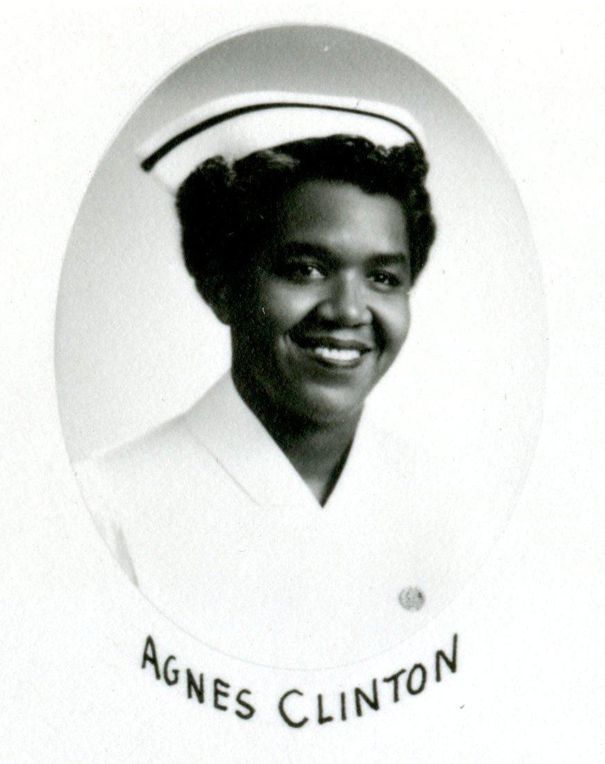
Agnes was described as having a great sense of humour and a close-knit group of friends. The School of Nursing was a place for women with shared aspirations to learn, work, and form bonds that lasted long past graduation.
After being awarded her diploma, school pin, and band to be worn on her nursing cap, Agnes went on to work as a public health nurse. Following 13 years of working in Toronto, she went to Yale to study alcohol addiction. Agnes then moved to Detroit, where she set up a mobile medical team for homeless people. 50 years after graduation, Agnes was working in a substance-abuse intake facility doing nursing assessments.
While Black women were excluded from nursing schools in an attempt to uphold the professions’ respectability, it is nurses like Agnes that demonstrate the dedication and courage of nurses in Toronto and Canada.
The Ontario government went on to close hospital-based nursing schools in 1973, and as a result, WCH helped form the nursing program at Toronto Metropolitan University (formerly Ryerson University). Women’s College Hospital’s School of Nursing allowed women to claim space in the medical profession, providing teaching that was limited or unavailable elsewhere. While these opportunities were limited for marginalized women until years after WCH’s formation, Agnes Clinton reminds us of the importance of documenting their experiences of struggle, accomplishment, and friendship.
Moving Beyond Borders: A History of Black Canadian and Caribbean Women in the Diaspora By Karen Flynn
288 Pages. University of Toronto Press, 2011.
‘They said I was too tall, too big …’ — how three nurses broke through nursing’s starched-white world.
Toronto Star, May 5, 2019.
Memories of the Women’s College Hospital School of Nursing
Virtual Museum of Canada
Agnes Clinton and the Women’s College Hospital School of Nursing
Article