Derailed
The History of Black Railway Porters in Canada
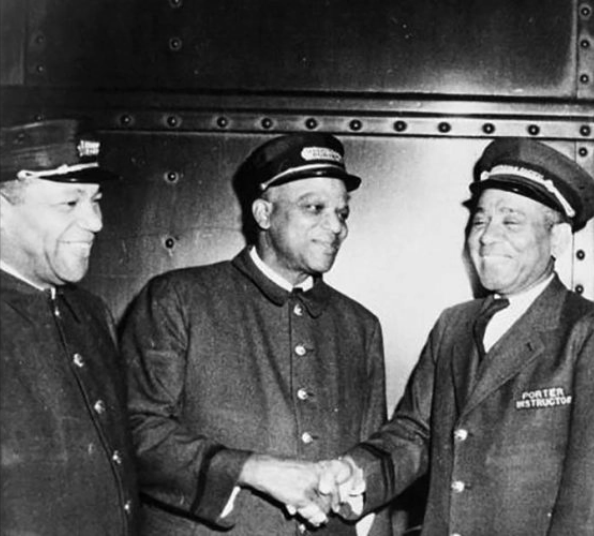
All aboard Derailed: The History of Black Railway Porters in Canada, a digital exhibition produced by Myseum in collaboration with author and scholar, Cecil Foster.
Derailed
Digital Collection
Content
Explorer
Women’s Auxiliary and the Brotherhood of Sleeping Car Porters
Who were the women who helped the Brotherhood of Sleeping Car Porters organize for social and political change?
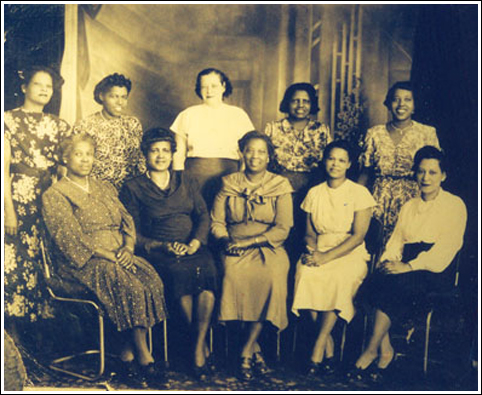
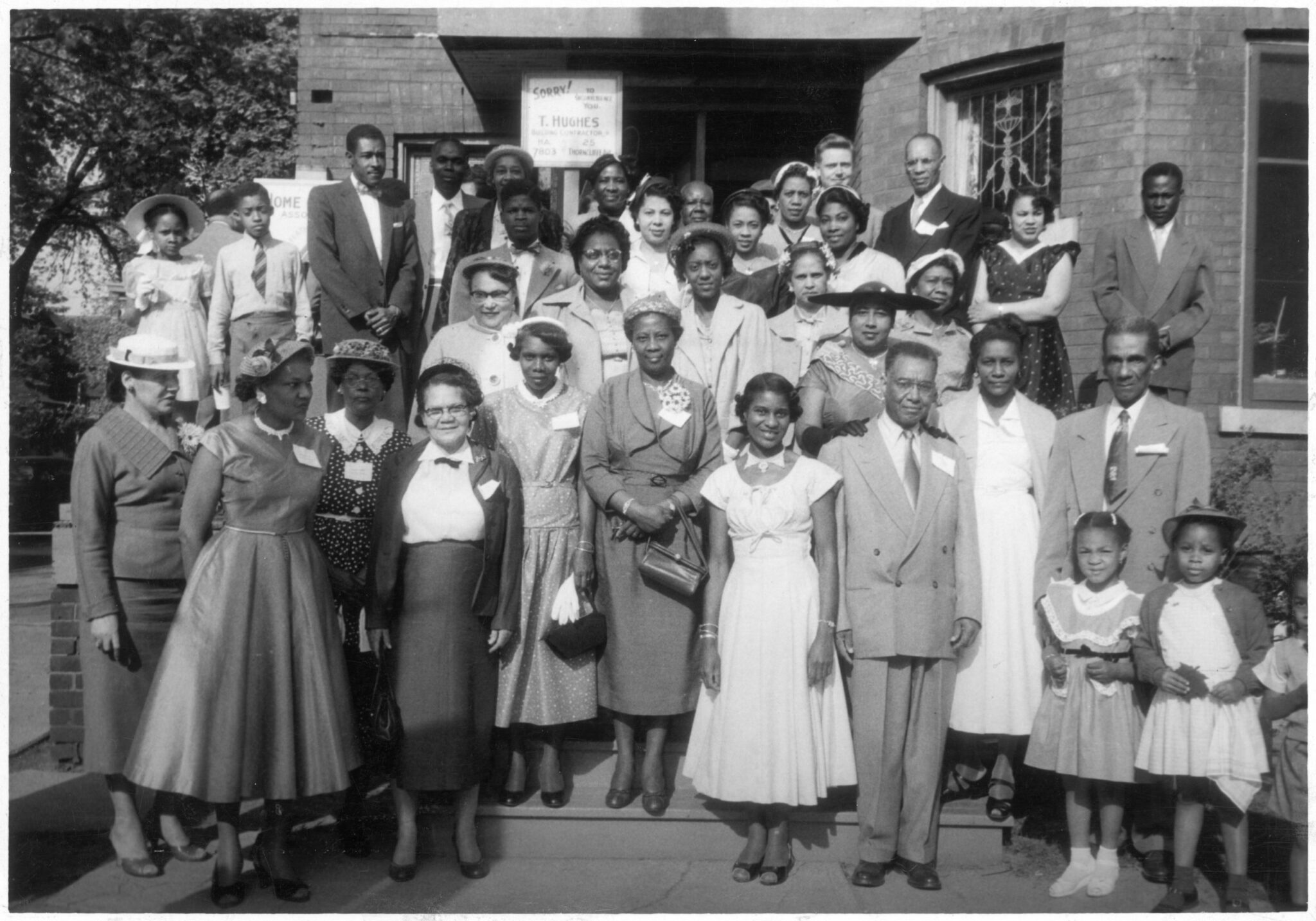
The Women’s Auxiliary was primarily made up of the wives and significant others of the porters. These women were the backbone to the porters’ activism across Canada. Among their jobs was to maintain the administrative books, set the agendas for meetings of the porters, and to cater to out-of-town officials in the union movement.
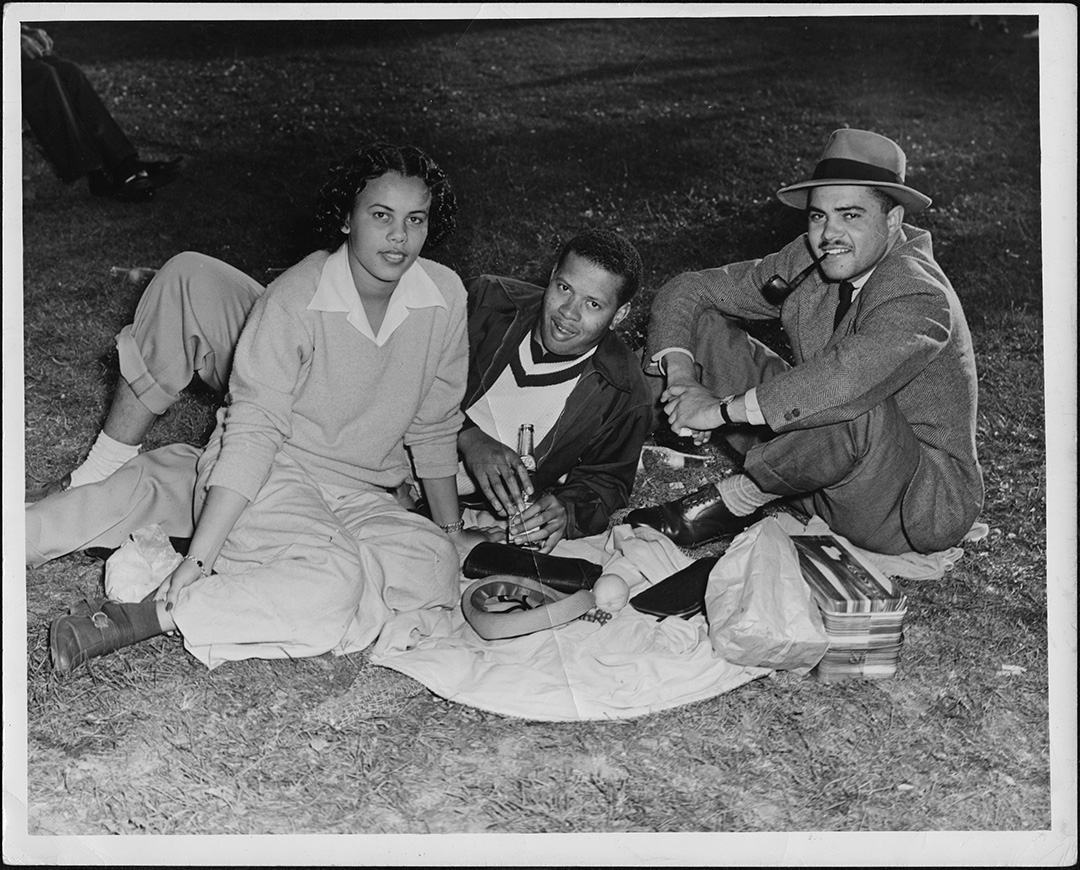
The Women’s Auxiliary was indispensable to the work of the sleeping car porters. They were the main organizers when porters were working away from their communities. They helped run the recruitment drives and organized the business meetings for the local chapter of the BSCP. They planned the annual picnics and community dances and hosted visiting BSCP officials who could not find lodging in segregated hotels in their homes.
The Women’s Auxiliary participated fully at the BSCP conventions for delegates from across North America and helped to establish the priorities for the union. Joining with their counterparts in the United States, the Canadian Women’s Auxiliary lobbied governments for child labour laws, an eight-hour work day, equal pay for women, worker’s compensation and improved social housing.
Women’s Auxiliary and the Brotherhood of Sleeping Car Porters
Article
Uniting the Unions: Black Railway Porters’ Fight for Rights
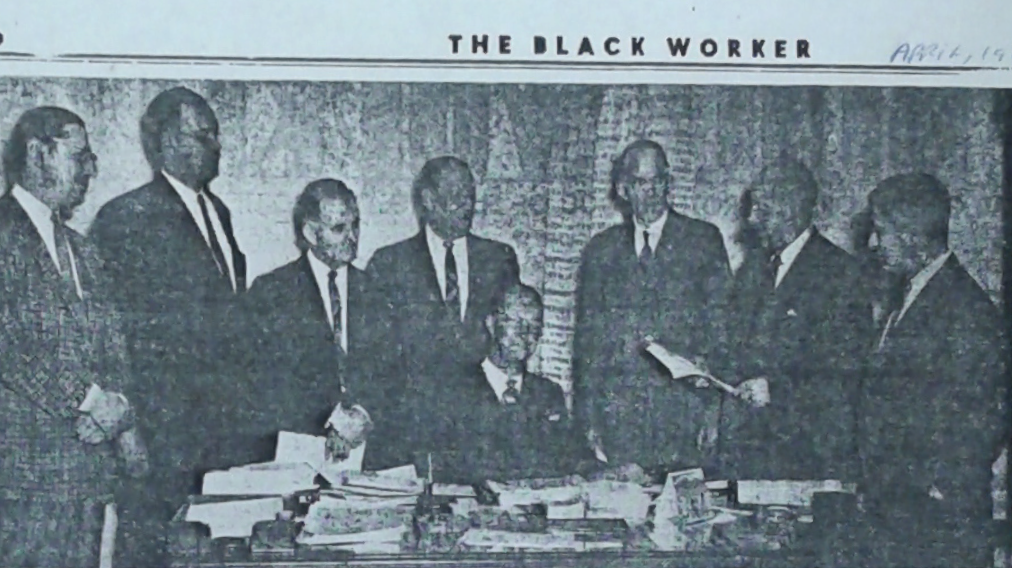
The convention was called to bring unity among different fractions of the Canadian labour movement. The main differences were between unions that were independent and based solely in Canada and those like the BSCP that were part of an international or North American organization. The idea was that despite where the head offices of the unions were located, whether in Canada or not, the Canadian labour movement should speak with a united voice on Canadian matters. This convention resulted in the founding of the Canadian Labour Congress (CLC), which has since become the main national voice for Canadian labour. The BSCP had to fight to send delegates to the convention, as the organizers initially tried to keep Black workers away. The BSPC figuratively pushed its way into the convention and came armed with three resolutions calling on the new Congress to condemn Canada’s racist policies, particularly in immigration.
Uniting the Unions: Black Railway Porters’ Fight for Rights
Article
Toronto, The Centre of an Emerging Canada
This monologue portrays John K Crutcher, a Porter for the Canadian Pacific Railway, as he retells the events of Christmas Eve 1954. Performed by Laurence Dean Ifill at Union Station.
Toronto, The Centre of an Emerging Canada
Video
• 6:36
They Call Me George
Meet George Pullman — the man at the centre of the offensive railway porters’ moniker.
Passengers initially saw porters as domestic workers offering good house-keeping services for the owner of the first sleeping car service, George Pullman. It was as if the passengers were visiting Pullman’s luxurious home on wheels and his attendants, like butlers of old, were serving them. Pullman had started sleeping car services as a way to encourage passengers to travel long distances—particularly across the entire North American continent—without having to break up their trips with overnight stays at hotels along the route.
Passengers could embark at one station and stay onboard the train until they got off at their destinations—a trip that might last several days. Pullman devised a business system of offering a quick luxury train service. He offered sleeping services—bed, washrooms, meals, drinks, the kind of aristocratic service guests would expect at a luxury antebellum home—on their uninterrupted train journey.
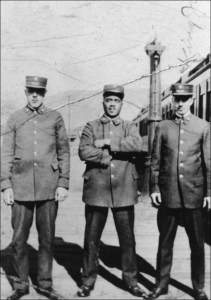
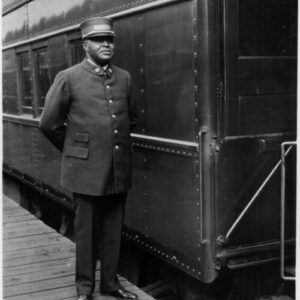
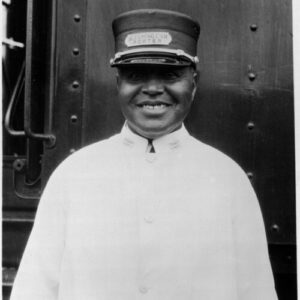
Pullman recruited Black men—starting first with those newly freed from enslavement in the United States but otherwise unemployed—to cater to the needs of white passengers. While travelling, it was the job of the porters to offer the best in luxury to the passengers entrusted to them by the “Boss Man”, George Pullman. Generally the porters were all called George, or George’s Boy. Porters hated that passengers tended not to call them by their names, even though each porter’s name had to be prominently displayed in the carriage.
They Call Me George
Video
• 1:53
The Brotherhood of Sleeping Car Porters
Who were the driving forces behind the social and political change led by the Brotherhood of Sleeping Car Porters? Learn about the historical background and significance of this post-war movement.
The Brotherhood of Sleeping Car Porters
Video
• 4:09
Stanley Grizzle
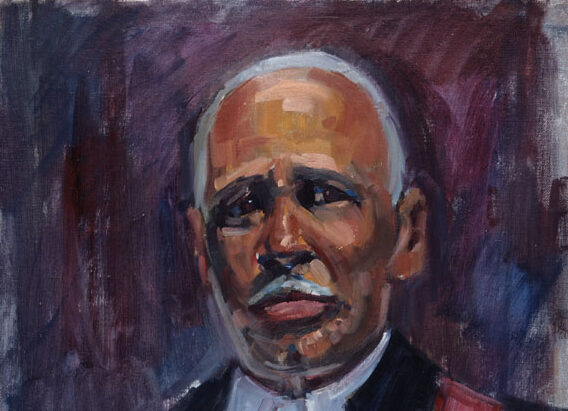
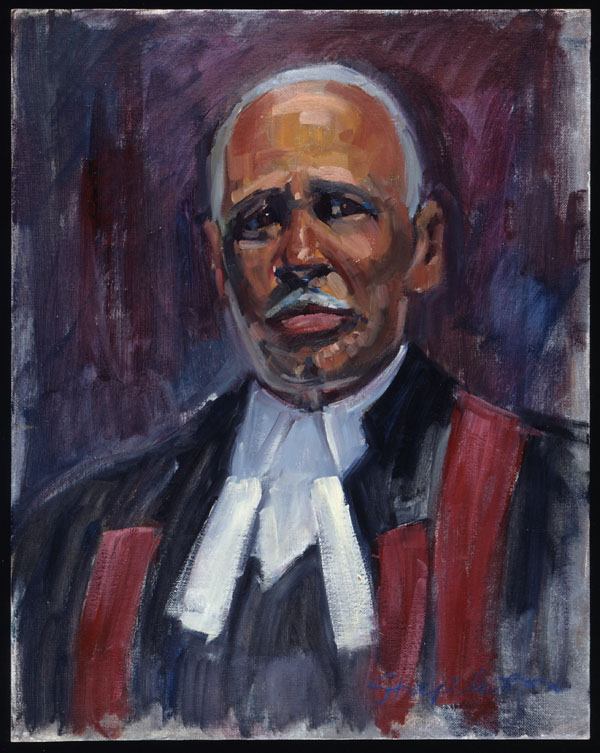
This dramatic monologue portrays Stanley Grizzle, a porter, activist, politician, and citizenship judge who reflects on his accomplishments and looks to the future.
It is performed by Daniel Jelani Ellis.
Stanley Grizzle
Video
• 3:37
Railway Porters Take On Ontario
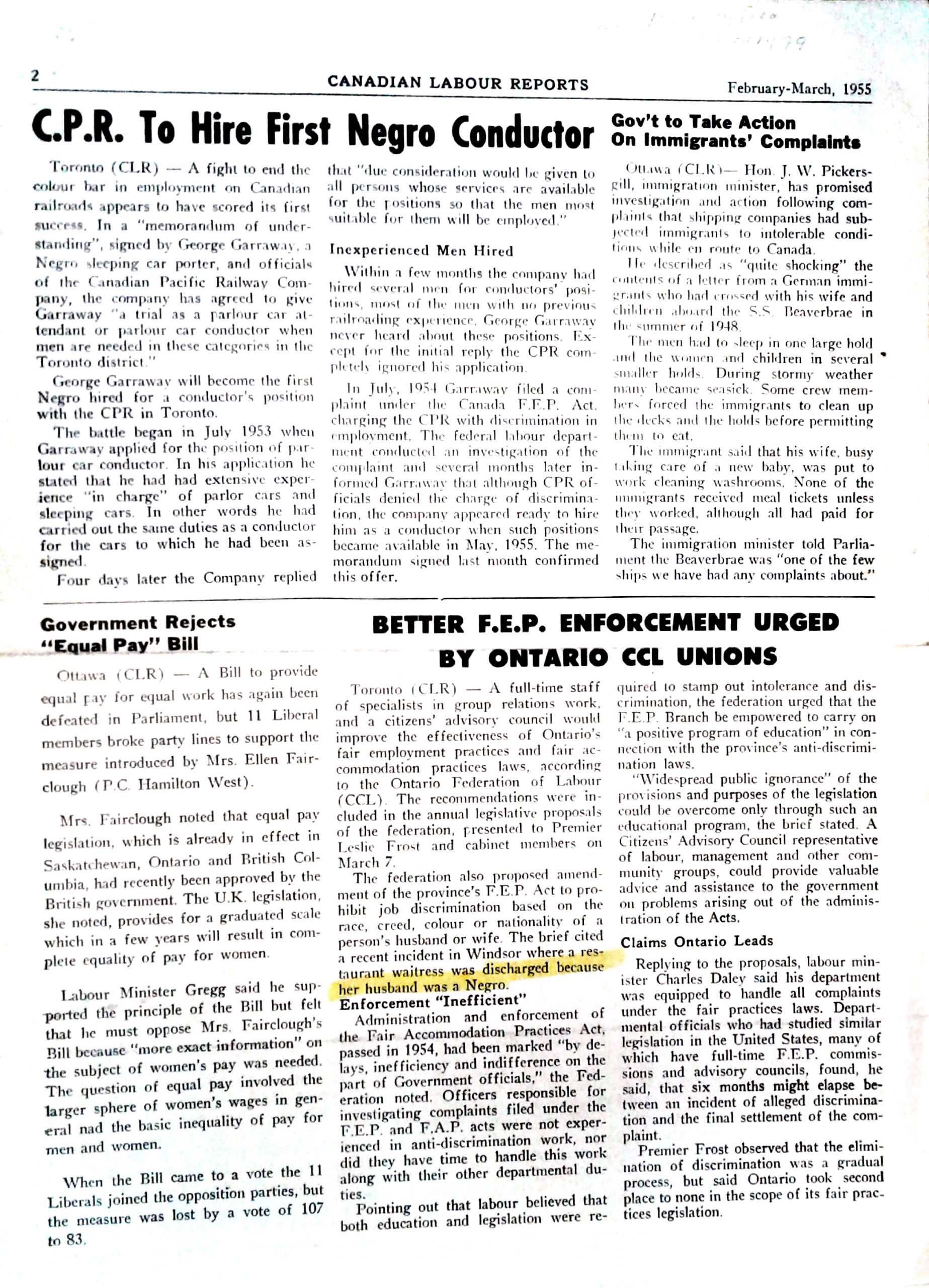
The sleeping car porters were active members in the formation of the Canadian Labour Congress (CLC) and in other areas of organized labour and political activism.
The porters had to fight against white unions that would deny them membership in the new organization. Opposition to participation by the porters came from unions that wanted only unions representing white Canadians to be members of the new organization. The opponents to the Black porters were generally supportive of Canada’s racist policies that favoured white people, and they were against the porters’ opposition to these government policies.
But the porters eventually won the support of some of the leading trade unions in Toronto and wider Canada. This was part of the efforts by the unionized porters to find allies to support them in their political and civic battles for citizenship rights for all non-white peoples. Eventually, the organizers relented and allowed representatives of a Black union to participate. At the CLC founding convention in 1956, the Brotherhood of Sleeping Car Porters (BSCP) moved a number of resolutions asking organized labour to join in the fight against Canada’s racist immigration policies.
Railway Porters Take On Ontario
Article
Railway Porters Go to Ottawa
How did a group of railway porters’ trip to Ottawa plant the seeds for Canadian multiculturalism? Learn about the lasting impact of the Brotherhood of Sleeping Car Porters and their fight for rights.
With the ending of WWII, Black people increasingly questioned their status in Canada.
Not only did Black men fight and die in the war but many of them worked on the hospitals on rails—special converted sleeping cars that transported wounded and sick soldiers returning home across Canada. All Canadians were first and foremost British subjects. This gave them many citizenship rights, such as the right to live in Canada and to have members of their family join them. With the exception of a few West Indians recruited to work as porters, Canada’s official policy was to exclude Black immigrants and visitors. Canada’s preference was for white or European immigrants. Black people took up the fight for equal treatment for all British subjects regardless of their perceived race or ethnicity.

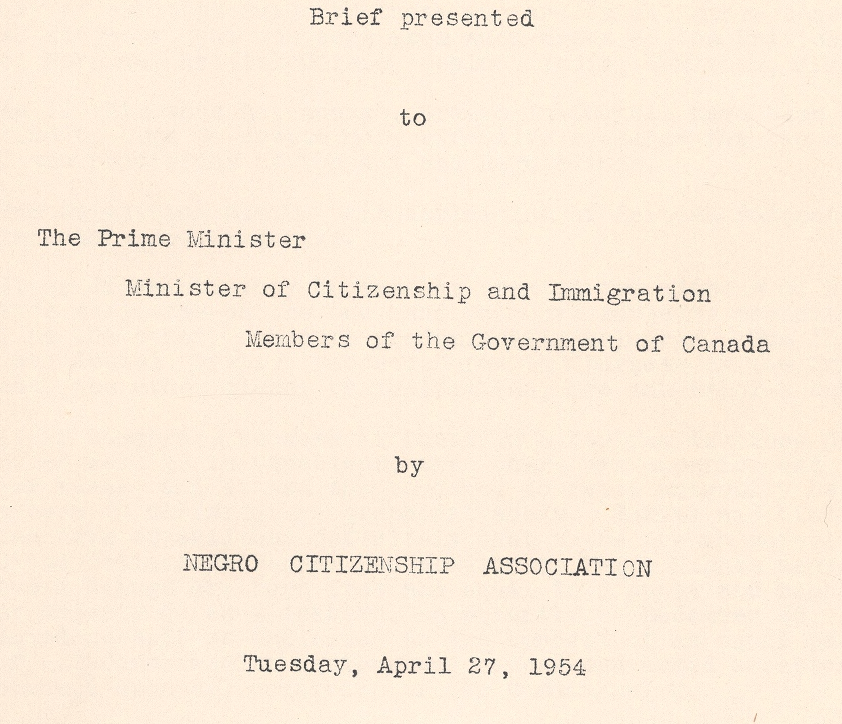
“The Negro Citizenship Association…was born in response to the continuing appeals of our brothers and sisters who were experiencing untold indignities and hardships occasioned by the wholesale rejection of their attempts to be legally admitted to Canada. At that time, not even close relatives were admissible […] Our Association was born out of the heartaches, the pain and suffering of the Negro himself […] It is growing because it is watered by the tears of the suffering Negro, and it is being fed by the mil of human kindness of our white brethren, as evident today.” – Director’s Remarks on the presentation of the Negro Citizenship Association, April 27th, 1954. Delivered by NCA leader Donald Moore.
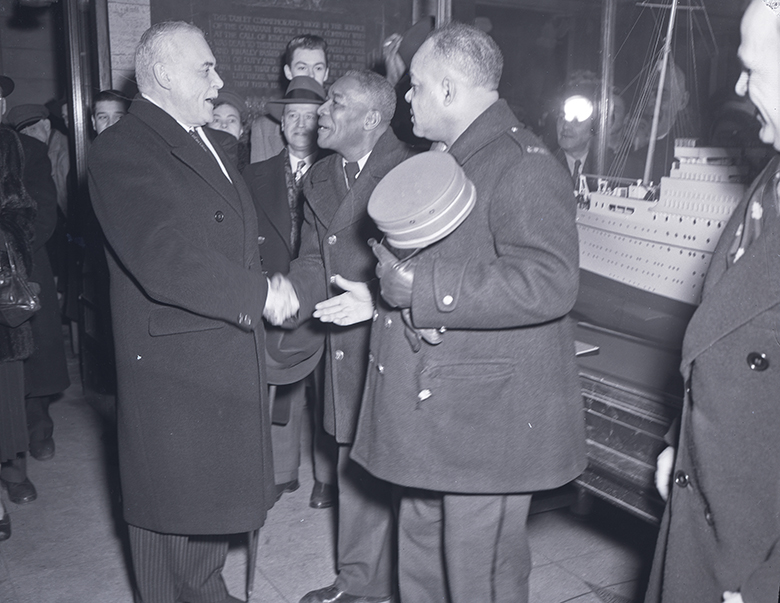
The Negro Citizenship Association was established in 1951 to give Black British subjects a voice in Canadian society. It was an umbrella group for many activist groups fighting for the same cause. Its members were primarily sleeping car porters and their spouses, if only because at that time jobs as sleeping car porters were the only work regularly available to Black people in Canada. Stanley Grizzle was a spokesman for the association as well as being the head of the Toronto chapter of the Brotherhood of Sleeping Car Porters. His brother, Norman, was also an official of the association that was headed by its founder Donald Moore, a former porter.

In 1954, a delegation of Black people fighting for greater citizenship rights decided to take their fight to the federal government in Ottawa. They assembled at Union Station in Toronto for the eight-hour trip on a Canadian Pacific Railway (CPR) train to Ottawa. The Toronto chapter of the Brotherhood of Sleeping Car Porters (BSCP), a trade union of Black porters, helped pay the delegation’s fares. The briefs presented by Moore and Grizzle would sow the seeds that changed Canada into a multicultural society.


“The members and officials of the Negro Citizenship Association and the Toronto C.P.R. Division of the Sleeping Car Porters will continue to fight unremittingly for the right of all peoples of this planet to enter Canada and become its citizens without penalty or reward because of their race, colour, religion, national origin or ancestry. Yes, we take the uncompromising position that what appears to be the premeditated discrimination in Canada’s Immigration Laws and policy (is) utterly inconsistent with democratic principles and Christian ethics.” – Statement by Stanley G. Grizzle. Courtesy of Cecil Foster.
Railway Porters Go to Ottawa
Article
Railway Porters and the Black Canadian Experience after World War II
Learn about the experiences of Black Canadians in early Toronto and Canada.
Black workers were needed on the trains as the porters (working onboard as domestics), or as the red-caps (workers who transported the luggage of passengers to and from the trains), the shoe shiners, or the labourers carrying luggage to and from the station. These were generally the only jobs that were available to Black people in Canada. A job as a sleeping car porter was the most coveted by Black men during these times.
The Black population in Canada grew modestly, but its numbers were always kept in check because of Canada’s racist immigration policies that effectively barred Black immigrants. Black people faced racism and segregation in all areas of life. Their lives were not affluent. Through organizations like Brotherhood of Sleeping Car Porters, the union’s Women’s Auxiliary, and the Negro Citizenship Association, Black people intensified their struggle to be recognized fully as Canadian citizens and for them to enjoy the good life. These struggles came to a head when a group of Black porters and their allies entered Union Station for a trip by train to Ottawa, where they would demand the government to put in place steps for the creation of a new, or a modern Canada—one where all peoples would be treated to common decency and have the fundamental right to human dignity.
Below, you can explore the address delivered by Daniel G. Hill to the Black History Conference, “Black History in Early Toronto”, February 18, 1978.
“When I came to Toronto in 1950 to study at this university, there were barely three thousand Blacks in the entire city. Although the community was small, it had even then a noticeable presence, consisting of the three basic sub-groups: Native Black Canadians […]; British West Indians, brought at the opening of the twentieth century by industrial interests – the railroads and Dominion Bridge and Steel; and post-World War II American Blacks – railroad porters, a few professionals, musicians, adventurers, ballplayers, and students.”
Railway Porters and the Black Canadian Experience after World War II
Article
Prologue
Produced by Museum of Toronto, the Derailed dramatic monologues seen throughout this exhibit were written and conceived by Meghan Swaby, directed by Byron Kent Wong, and filmed at Union Station.
Derailed is performed by Derick Agyemang, Daniel Jelani Ellis, Laurence Dean Ifill. This digital presentation was produced in partnership with zero11zero, Iron Bay Media, and Union.
Prologue
Video
• 2:21
Porter’s Legacy
This dramatic monologue portrays Stanley Grizzle, a porter, activist, politician, and citizenship judge as he reflects on his accomplishments and looks to the future.
It was performed by Daniel Jelani Ellis.
Porter’s Legacy
Video
• 3:36
Overview
The legacy of Canada’s Black railway porters can be seen in the diverse cultural communities that make up Toronto, and many of the fair employment practices we benefit from today. Yet few know the history of the porters and the significant contributions they have made to the fabric of modern Canadian society.
Canada was built around the railways — known by many as the famed ribbon of steel. The heyday for rail passenger travel was the first six decades of the 1900s. During this time, widely adapted inequalities, often racial, meant that railways provided one of the few work opportunities available to Black men. Employed on the trains as sleeping car porters providing luxury service, porters experienced racial discrimination and exploitation on the job every day.
Untenable working conditions inspired the porters to fight for significant improvements. Through the formation of the Brotherhood of Sleeping Car Porters (BSCP), and under the leadership of Toronto-born Stanley Grizzle, porters in Canada became pioneers in the fight for fair employment practices and for wider human rights. In 1954, porters boarded a railway car from Union Station to Ottawa to begin the fight to remake Canada into a more inclusive society.
They advocated to change the immigration policy to a system that opened up Canada to immigrants from around the world. Today, the porters’ advocacy and activism continues to influence Canadian society and our city. Their impact on our labour, immigration, and multiculturalism policies has shifted our country, and set the stage for a Toronto that is now recognised as one of the most multicultural and multiracial cities in the world.
Overview
Article
Notable Porters
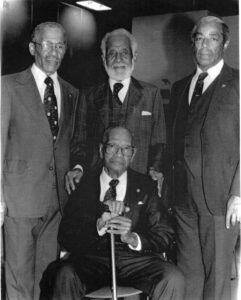
Canadian Railway porters were drawn from every segment of Black communities in Canada and abroad. As a result, porters reflected the characteristics of the breadth of Black life in their personal lives.
Porters had their individual ambitions, tastes, values, and ways of thinking. What united these diverse individuals was their job as porters and that for Black men, working as porters was the only employment readily available to them. They were united in the fight to change these circumstances. Out of the wide array of characters that worked on the “roads,” there were many notable porters that stand out for leading the fight for change and for citizenship rights for Black and other peoples of colour.
Keep scrolling to meet some of the porters who played crucial roles in this movement.
Today, the porters’ advocacy and activism continues to influence Canadian society and our city. Their impact on our labour, immigration, and multiculturalism policies has shifted our country, and set the stage for a Toronto that is now recognised as one of the most multicultural and multiracial cities in the world. This is a part of Musem of Toronto’s award-winning digital exhibition, Derailed: The History of Black Railway Porters in Canada.
Notable Porters
Article
Lee Williams
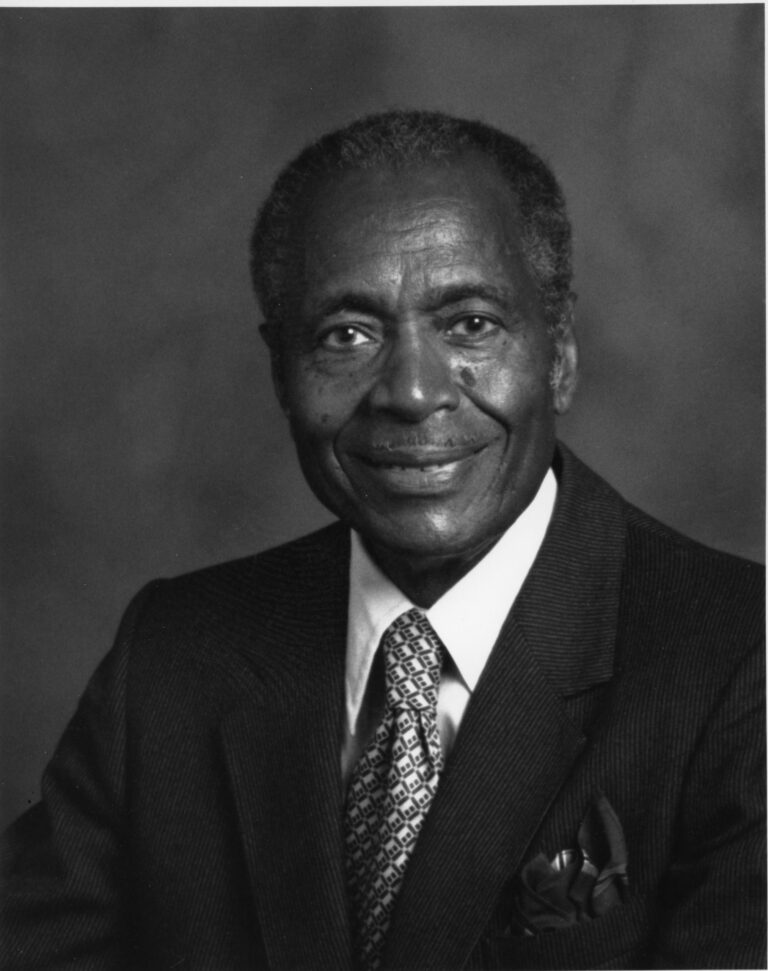
Winnipeg-based Lee Williams was a Canadian National Railway (CNR) porter who led the fight to change Canada on two fronts. First, he had to fight his own union, the Canadian Brotherhood of Railway Employees, which had signed and maintained an agreement with CNR that Black men could only work as porters on the trains. The second fight was in alliance with his allies in the Brotherhood of Sleeping Car Porters (BSCP) at the privately-owned Canadian Pacific Railway (CPR).
Williams befriended Prime Minister John Diefenbaker in his early days as he travelled from Saskatchewan to Ottawa. Diefenbaker was often called “a friend of the porters” and this was primarily because of his relationship with Williams. When Diefenbaker became Prime Minister, Williams successfully lobbied him to force CNR rail to create better working conditions for porters. Williams’ biggest success was when he oversaw the dismantling of segregated employment on the railways allowing Black and other people of colour as well as women to be eligible for all jobs on the rails. This occurred in 1978 when the federal government merged CPR and CNR into the current Via Rail of Canada, by which time Canada was officially a multicultural society.
Lee Williams
Article
John K. Crutcher
This monologue portrays John K Crutcher, a Porter for the Canadian Pacific Railway, as he retells the events of Christmas Eve 1954.
It was performed by Laurence Dean Ifill at Union Station.
John K. Crutcher
Video
• 6:37
Historical Context
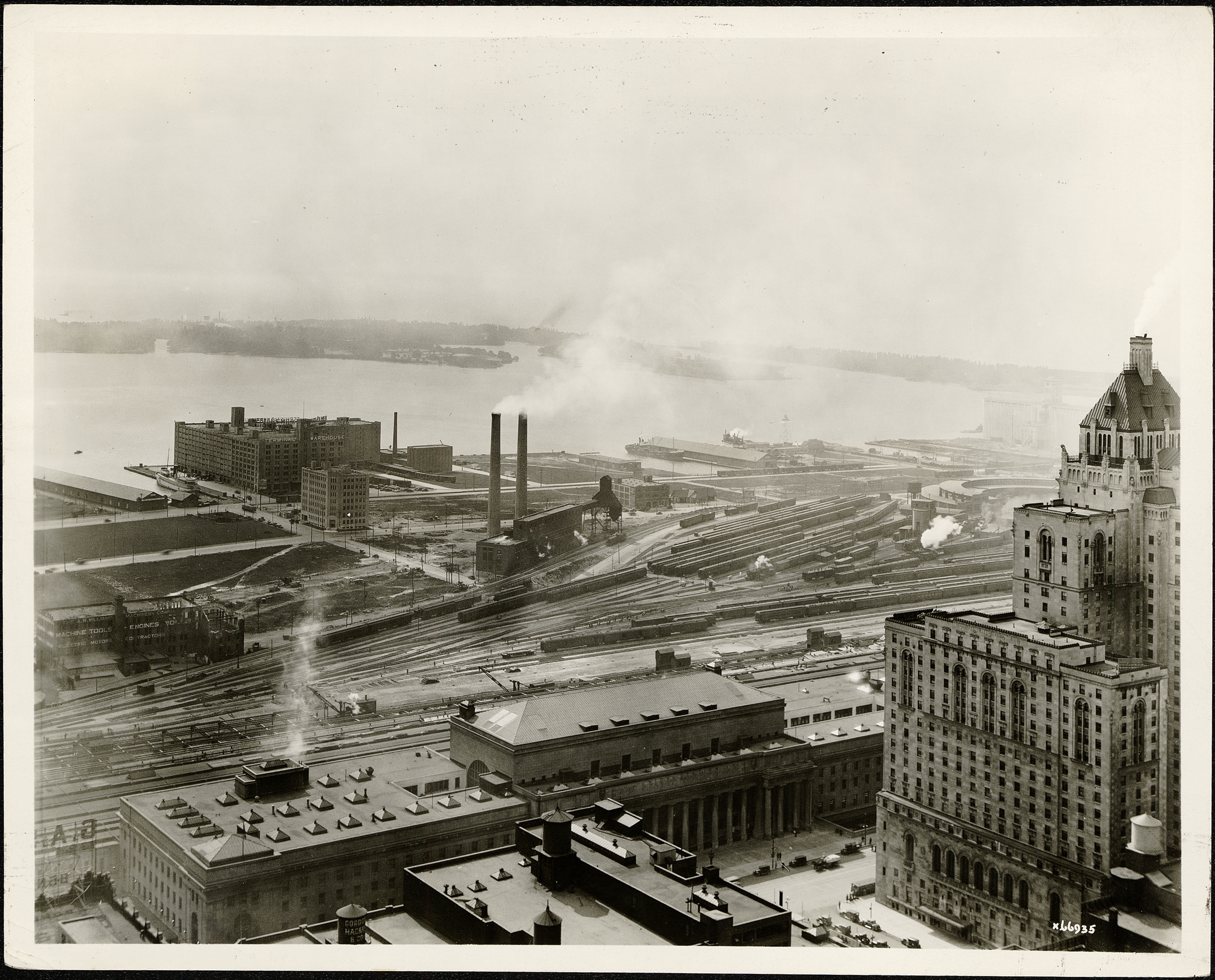
The heyday for rail passenger travel was the first six decades of the 1900s. This was a time of immense change especially in the decades leading up to World War II. The North American continent was opening up for travel and business.
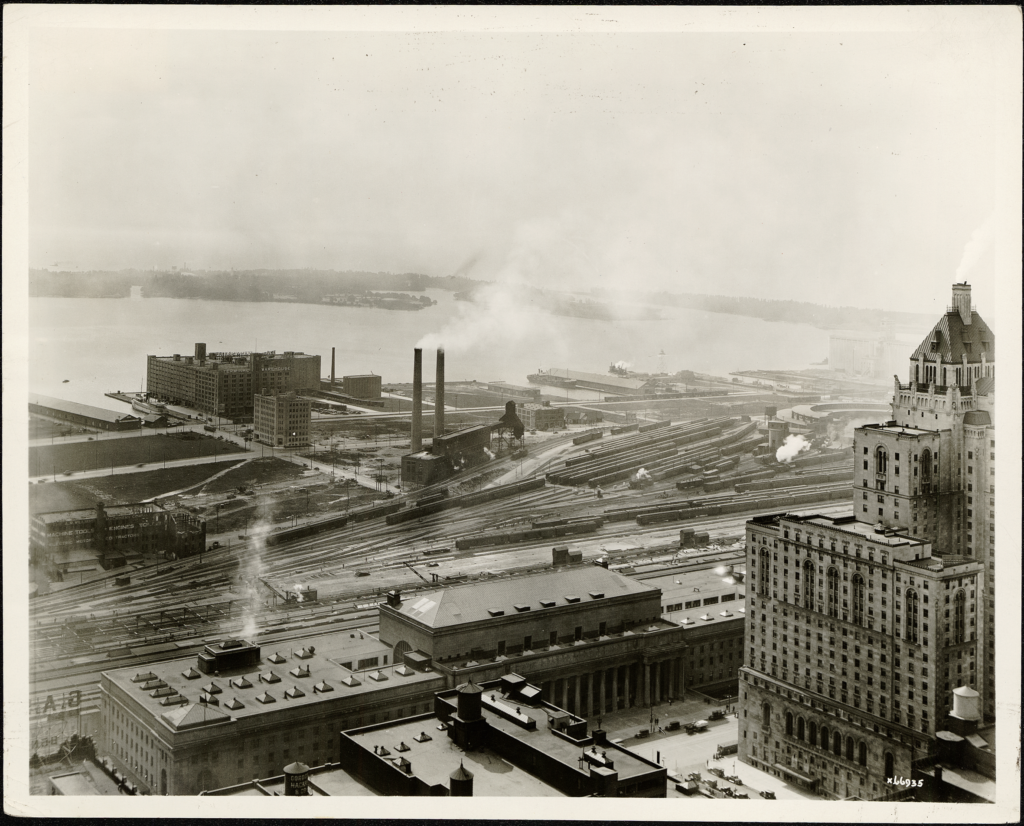
On the northern tip, Canada continued to be knitted into a country by the railways — known by many as the famed ribbon of steel. Ontario was becoming the economic powerhouse of Canadian confederation. Toronto was also emerging as the financial capital of the country. When opened in 1927, Toronto Union Station quickly became the hub for political and financial influence. By the 1950s, the railways were making Ontario and the rest of Canada into what is called an affluent society, noted for its prosperity.
Historical Context
Article
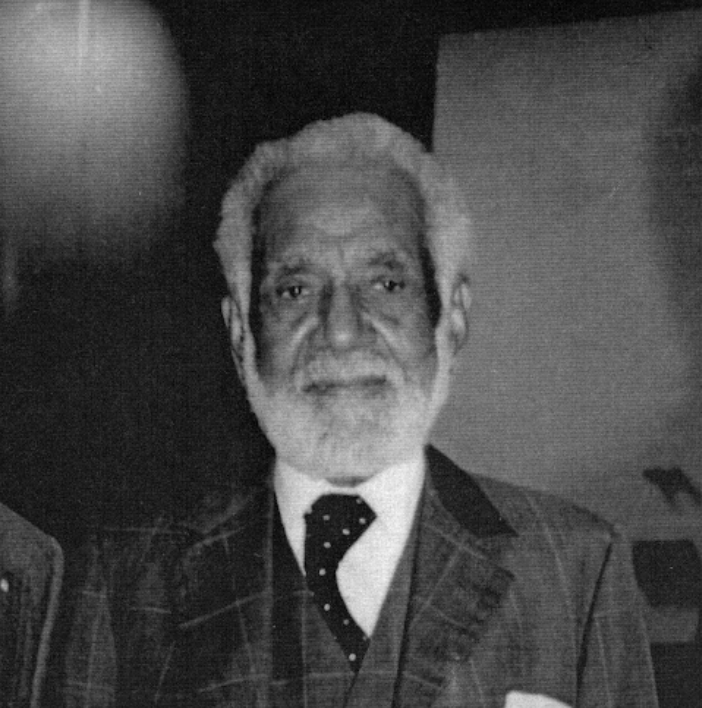
Harry Gairey
Jamaica-born Harry Gairey was called the “Grandfather” of the Toronto Black community. Gairey led the fight for a change to Canada immigration policy. Gairey chartered the Canadian Pacific Railway (CPR) train in his name that took the black porters delegation to Ottawa in 1954.


Like so many Black men of his time, he could only find work as a sleeping car porter. His base for work was Toronto Union Station. After the end of WWII, Gairey began to notice the large number of new immigrants from countries that had fought against Britain passing through Union Station on their way to settle in locations across the country. Because they were white, they were easily accepted as immigrants and would go on to be granted Canadian citizenship. Black British subjects however — including those who had fought for Britain and the Allies — were not allowed to immigrate to Canada or even visit, simply because of the colour of their skin. Gairey denounced this double standard.
Harry Gairey
Article
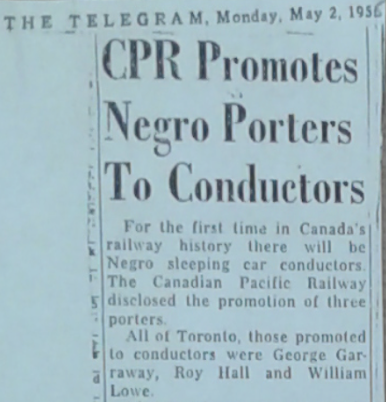
George Garraway
George Garraway would create history for the Brotherhood of Sleeping Car Porters (BSCP) and Black people across North America. He was the first porter to work as a conductor in Canada.
To achieve this honour, Garraway and the Toronto chapter of the BSCP had to convince the leadership of the international union in the United States to support them. In a press release issued April 30, 1955 the union celebrated: “A fight to end the colour bar in employment on Canadian railroads has scored its first success. Mr. George Garraway became the first Negro hired as a Sleeping Car conductor with the Canadian Railway…”

George Garraway
Article
Ernest Russell
This dramatic monologue portrays Charles Ernest Russell, a Senior Porter who is sent a letter from the civil rights activist A. Philip Randolph, to organize a Canadian chapter of The Brotherhood of Sleeping Car Porters.
It is performed by Derick Agyemang.
Ernest Russell
Video
• 4:10
Enacting Change
In 1939, a group of porters decided to invite the American union organizers, the Brotherhood of Sleeping Car Porters (BSCP) to organize Black Canadian porters as a trade union.
The BSCP was the main union that led the fight by porters for social and political change in Canada and the United States. Founded in New York by porters a few years earlier, the American BSCP was under the leadership of Asa Philip Randolph, an outstanding Black civil rights champion. Before that, porters in Canada had tried to form their own unions. These efforts were crushed by the railway companies. At Canadian National Railway (CNR), porters found themselves in a union which worked in league with management to keep the Black porters from working in other railway jobs reserved only for white people. At Canadian Pacific Railway (CPR), porters were represented by a management-appointed association, which was intended to work with management on behalf of the porters. The porters found that in disputes around working conditions, the association tended to side with management. This meant the porters had no clout in negotiations as the association did not fully represent their interests. The BSCP stepped into this void and quickly established Canadian chapters, replacing the management-appointed associations.
Especially after World War II, Toronto would become the hot spot for union activity by the porters and their allies. One name stands out among the BSCP leadership: Stanley Grizzle, head of the Toronto chapter. In 1954, Grizzle and the Toronto Chapter paid the cost for a delegation of porters and their allies to travel from Toronto to Ottawa to meet with the government to protest the treatment of Black and other peoples of color. At this meeting, the porters called for drastic changes in Canadian immigration policies. They sowed the seeds of desegregation that would eventually bloom into the multicultural Canada of today.
Enacting Change
Article
Donald Moore
This scene portrays the historic event of Porters travelling to Ottawa to demand greater citizenship rights for Black people.
It is performed by Derick Agyemang and Daniel Jelani Ellis.
Donald Moore
Video
• 6:48
Diplomats of the Railway
This dramatic monologue portrays a Porter Supervisor, the shining example of a Railway Porter.
It was performed by Daniel Jelani Ellis.
Diplomats of the Railway
Video
• 2:27
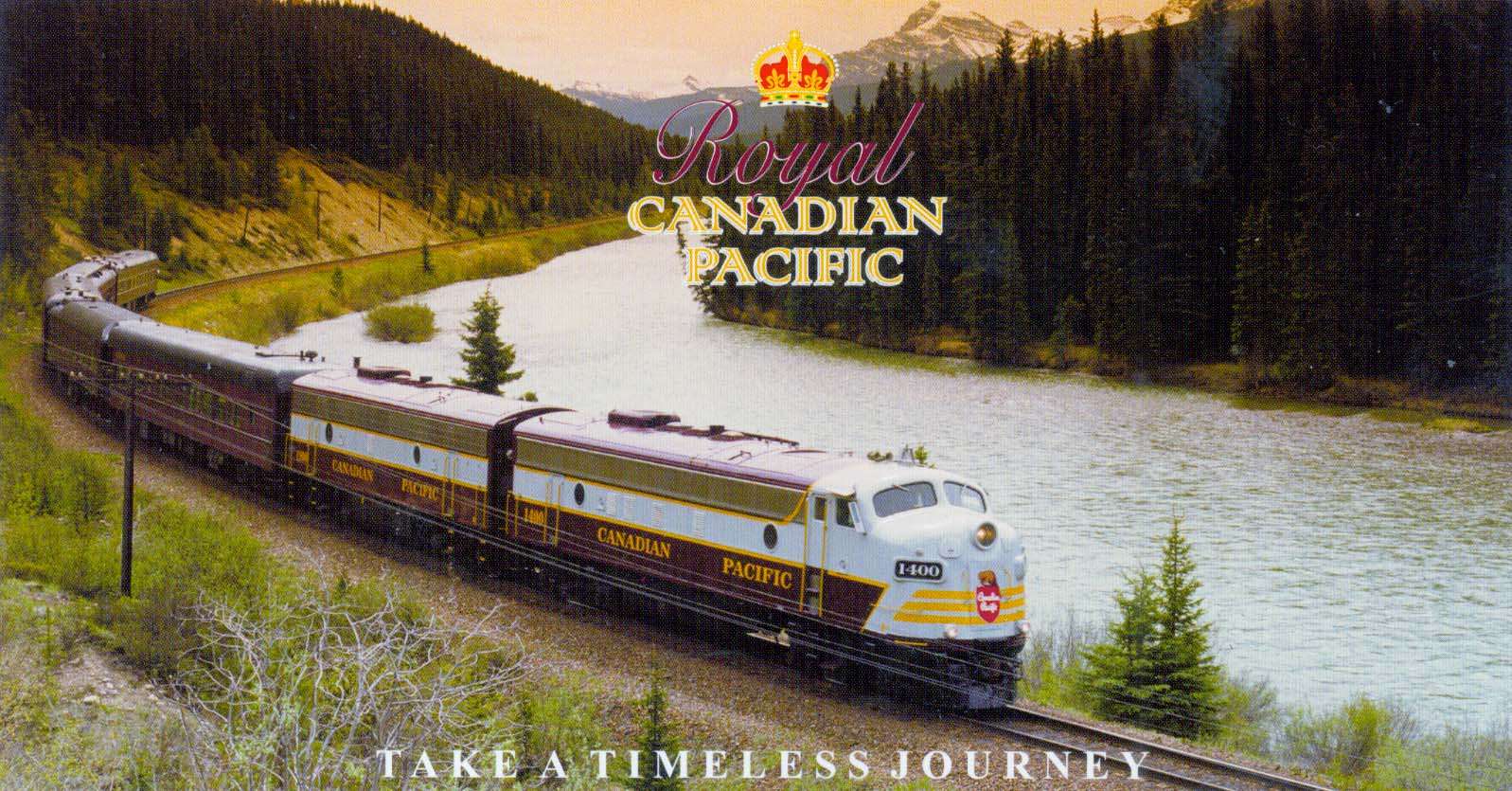
Canada’s Railways (CPR/CNR) and Post-War Porters
Learn more about the transcontinental railways that shaped Canadian geography.

While the Pullman service was established in the United States, it would soon come to Canadian railways. When talking of Pullman service in Canada the reference is to CPR. CPR operated a pullman service in Canada and it was based on the same kind of segregated service as in the US. This segregation is often called Jim Crow, based on the racial separation common primarily in the Southern United States from the 1870s onwards. Jim Crow legally prevented Black and white people from mingling or sharing common services, accommodations and the like.

Canadian National Railway (CNR) was owned by the federal government and tasked with uniting the country. It provided a sleeping car service of its own by copying Pullman’s model. In the first decade of the 1900s, it officially introduced/imported Jim Crow segregation on the trains.
Canada, from 1867, was built around the railways. But Canada was intended to be a “White Man’s Country”, meaning even the sleeping car porters – as diplomats of the railways – were not recognized as Canadians because they were primarily Black, Brown and Indigenous peoples.
Canada’s Railways (CPR/CNR) and Post-War Porters
Article
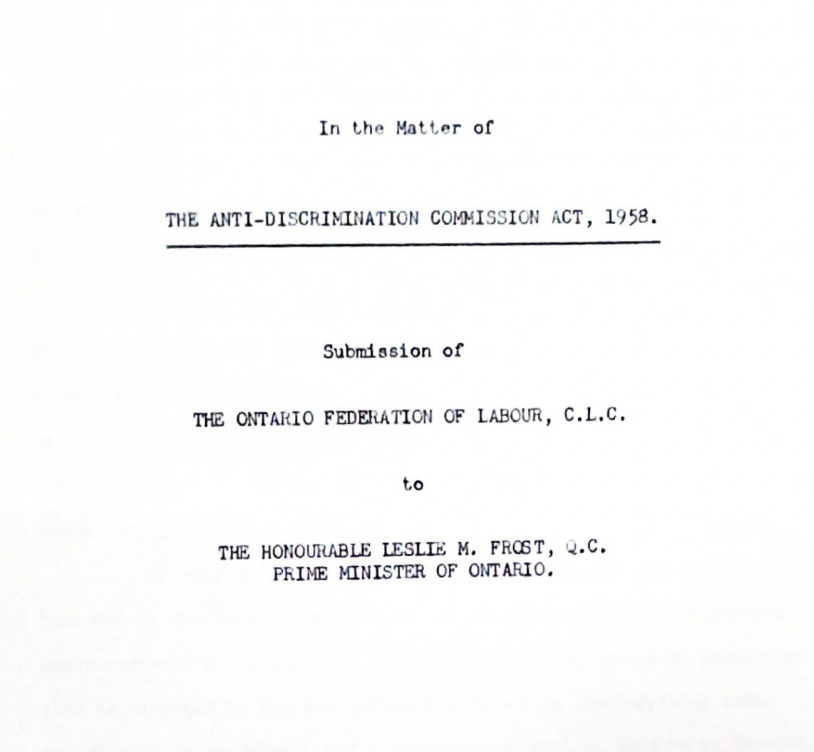
Black Railway Porters and Their Lasting Impact on Canadian Labour Policy
How Stanley Grizzle and the Brotherhood of Sleeping Car Porters advocated for fair labour practices in Canada.
After WWII, Stanley Grizzle’s mentor in the Brotherhood of the Sleeping Car Porters, Asa Philip Randolph, had pushed the United States government to set up a commission on racial segregation. This led to efforts to implement “fair practices” in such areas as employment, housing, accommodation, banking and other forms of public life. Grizzle and others took up the same fight in Canada. Most of their efforts were at the provincial level with Grizzle and others in the trade union movement concentrating their efforts on pushing the Ontario government to introduce fair practices. In many cases they were successful, ahead of their counterparts in the United States. The porters used the same strategy with the federal government in an effort to push Ottawa to introduce “fair practices” on the railways, and in immigration, especially in how it treated white and Black British subjects. For example it became illegal not to rent apartments or to offer loans to buy homes solely based on race. Black people and other minority ethnic groups could apply for jobs traditionally not available to them and they could live and work without racial restrictions.
Black porters were actively involved in politics at the municipal, provincial and federal levels across Canada. They formed associations to collectively fight political battles. One of their main allies at the national level was the Montreal-based Canadian Jewish Congress. Some of the porters were politically involved as individuals whether it was appearing before school boards to protest against racist elements in education, running for office at the provincial level or helping to organize federal political alliances. The Brotherhood of Sleeping Car Porter (BSCP) was particularly active on behalf of the porters at the federal level. Working through the Canadian Labour Congress (CLC), the porters helped forge the links between labour and the labour-friendly Co-operative Commonwealth Federation (CCF), which went on to become the current New Democratic Party. BSCP national organizer A. R. Blanchette became a leading spokesman on human rights for the CLC.
Black Railway Porters and Their Lasting Impact on Canadian Labour Policy
Article
Black Railway Porters and Their Lasting Impact on Canada’s Multiculturalism Policy
When Prime Minister Pierre Trudeau announced in 1971 that Canada was officially a multicultural country, he was signaling a clear break in Canadian history. This was the beginning of a new country — a modern Canada — with the goal of the providing social justice to all Canadians. In effect, Trudeau was philosophically adopting many of the suggestions from political activists like the porters and their allies who had been calling for Canada to make a clean break with its past. The Toronto chapter of the Brotherhood of Sleeping Car Porters (BSCP) and its allies were among the earliest advocates for a multicultural Canada. They wanted Canada to become a place where race does not matter.
From the inception of Canada, Black porters had worked on the trains that attempted to knit separate regions, provinces, languages and peoples into a confederation. But they always advocated against the idea and practices that Canada was only for the benefits of white or European peoples. Porters led the fight against Canada as a “White Man’s Country.” In 1971, when Canada officially became a multicultural country, the porters could celebrate the idea that Canada had ceased to be a racist country. For them, Canada would essentially become a brotherhood of sorts, with membership opened to all human beings.
As a multicultural country, Canada had to dismantle an immigration system that had been in place since confederation and accepted only white people. This was a system devised to produce a “White Man’s Country” by selectively choosing white people to become future Canadians. Porters had suggested that Canada should adopt an immigration policy that allowed it to recruit new citizens from around the world, regardless of their racial and ethnic profile. Another key feature of this legislation was the prominence it gave to family reunification, making it easier for immigrants to sponsor their family to Canada. The acceptance of these features, long advocated for by Black communities, was the main principle informing Canada’s new Immigration Act of 1976. The Immigration Act made possible the ultimate transformation of Canadians into a multicultural people.
In 1977, Canada implemented a New Citizenship Act. This was a historic moment. With this new law, Canada was deciding who was truly a Canadian and who would enjoy all the rights and privileges of Canadian citizenship. The proclamation of this law was another step in dismantling the old Canada and the beginning of a multicultural society in modern Canada. Under this law, race would not be part of the criteria determining who received Canadian citizenship.
Stanley Grizzle, a leading figure in the mobilization of Black porters advocating for a just society, had lived to see the birth of the new Canada that he had spent most his life fighting for. In 1978, Grizzle became the first Black Citizenship judge in Canada. His main job was to swear in immigrants from all parts of the world as new Canadian citizens. He would make it a point of telling them about their rights and privileges as Canadians. It was a job and citizenship ritual he enjoyed immensely.
Black Railway Porters and Their Lasting Impact on Canada’s Multiculturalism Policy
Video
• 2:14
Black Railway Porters and Their Impact on Canada’s Immigration Policy
How Black railway porters paved the way for citizenship rights in Canada.
Porters demanded that Canada adopt an open immigration policy. They also advocated that immigrants from all parts of the world should have equal opportunity to immigrate to Canada based on the country’s needs and the newcomers’ commitment to their adopted country. They demanded all Canadian citizens should be equal and should all have the same rights and entitlements. The struggles of the porters paved the way for the recognition that Canadians can be culturally different but still share the same citizenship.
Under the West Indian Domestic Scheme that was proposed by the porters and their allies, Canada agreed to admit Black women who were trained as good housekeepers. They would work or “manage” the business of Canadian homes. In effect, they would be doing the “good-housekeeping” duties of train porters but as live-in maids and domestics in Canadian homes. Eventually the workers went into hospitals, caregiving institutions and other areas of homecare across Canada. This prototype worked so well that it was expanded to include young women from all over the world—most notably from the Philippines, Mexico and Latin America that were traditionally excluded from immigrating to Canada. These domestic workers led the way for an increase in Canada’s non-white population when they encouraged their families to join them in Canada.
Black Railway Porters and Their Impact on Canada’s Immigration Policy
Video
• 1:15
Black Canadian Civil Rights and the Impact of World War II
Learn about how World War II called for radical changes and civil rights for Black people in North America.
The World War II called for radical changes and civil rights for Black people in North America — the fight was led by Sleeping Car Porters.
In their daily work, porters saw segregation. They noted that at the end of WWII their passengers were treated differently based on the colour of their skin and ethnicity. In this regard, all British subjects were not equal. Black men who served in WWII were denied services in Canada, including the right to have family members join them to live in Canada. On the other hand, Canada actively recruited British subjects and even immigrants from former enemy countries. Canada also brought home the women and children of Canadian soldiers in Europe, as an act of family reunification. These women were called the War Brides and for some of them, the first Canadians they encountered on arriving in the country were the sleeping car porters. Black porters advocated that Black British subjects should be offered the same kind of family reunification for their family outside Canada.

The struggles by Black people in Canada for citizenship rights was part of a wider campaign by Black people around the world. Three specific factors contributed to the climate for change after WWII. In the United States, Black soldiers returned from fighting for liberty overseas to find racial segregation at home. Second, Black British subjects from the West Indies had rushed to England to defend Britain in the war. After the war, they found themselves excluded from British society and many of them were sent back to the West Indies. But they refused to stay and returned with their families to England. The first group of them returned in 1948 on a ship named Windrush and subsequently became part of what is known as the Windrush Generation in Britain. Third, many British subjects in the West Indies were advocating for political independence from Britain — starting separately with Jamaica and Trinidad and Tobago in 1962 — and for stronger trade and cultural links with Canada.
Black Canadian Civil Rights and the Impact of World War II
Article
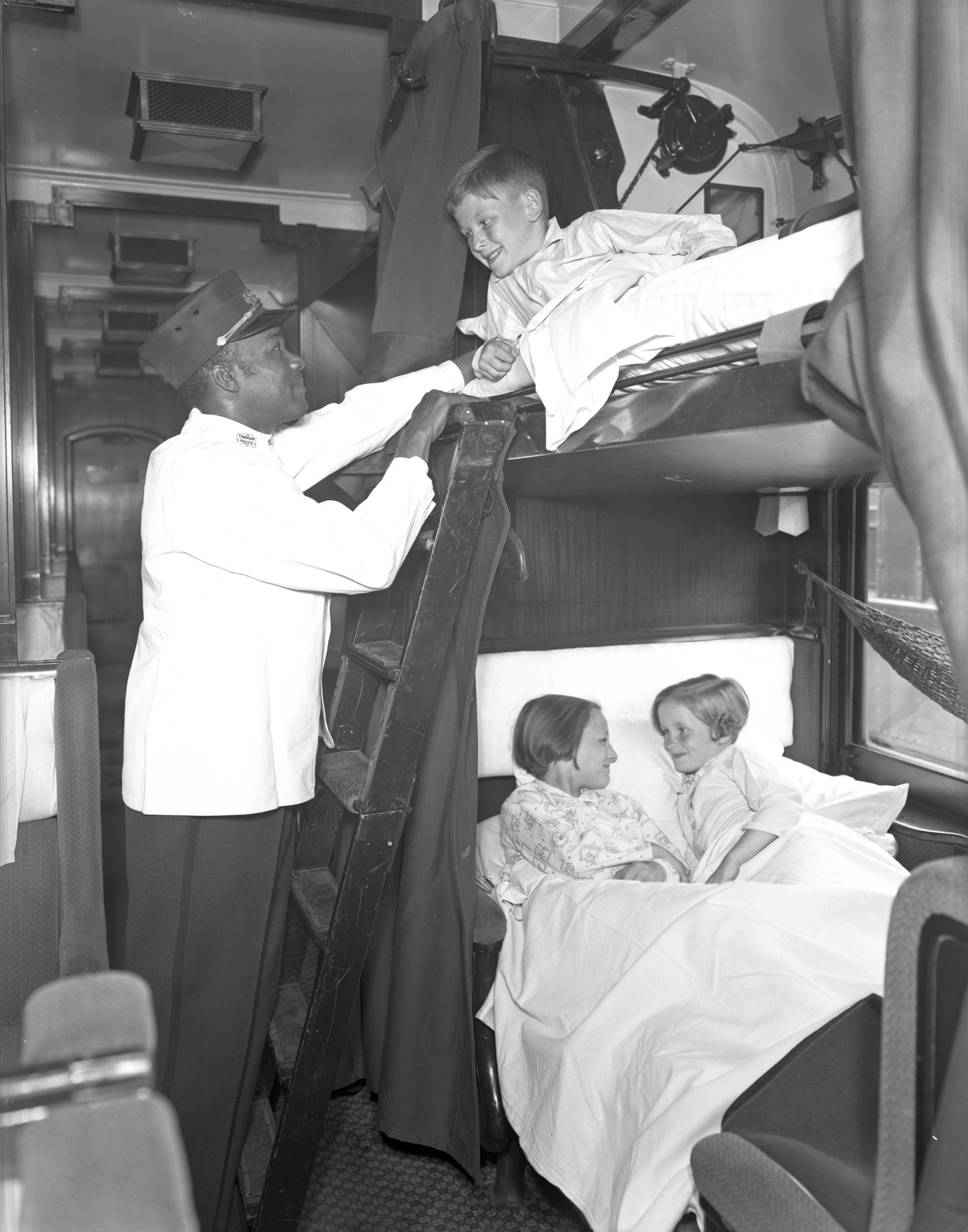
A Day in the Life of a Black Railway Porter
Porter work was drudgery: often gone from home for several days, working long hours with hardly any sleep, always at the ready to serve the passengers.
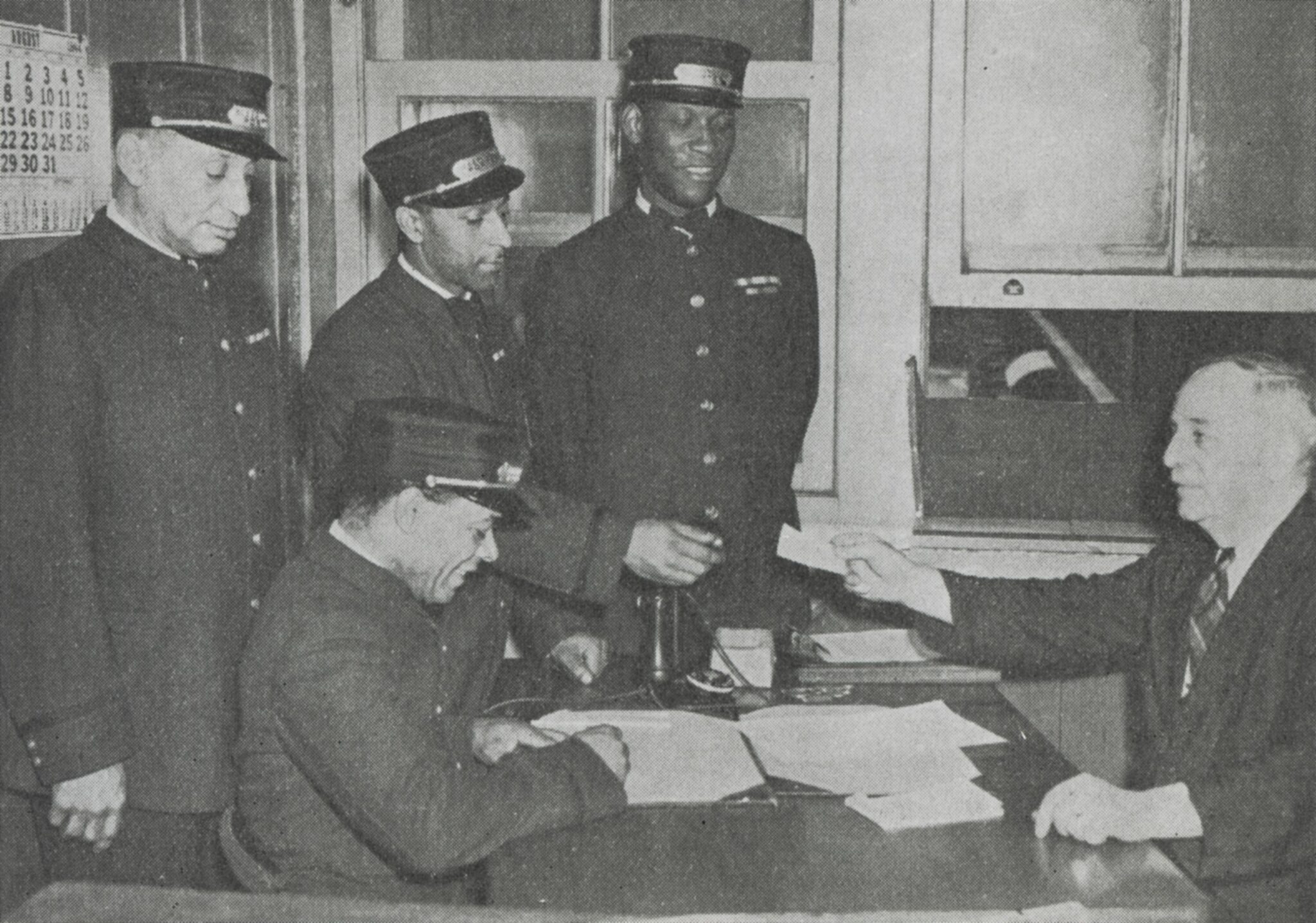
Initially, they were paid mainly in tips, gratuities from the passengers. Usually the porters reported for work up to four hours before the train’s scheduled departure. They inspected the carriage assigned to them to make sure it was clean and safe — dusted, swept, mopped, fluffed pillows, cleaned washrooms and spittoons. All the while they had to keep a keen eye out for stray “gems”—the code names for common pests like bed bugs, roaches, mice and rats—that undermined claims of good housekeeping.
The conditions of the carriage had to be spotless. Porters turned down beds for sleep and turned them up in the morning, making sure there was the requisite amount of linen on board. They polished shoes overnight and provided wake up calls in the morning.
Porters placed their name tag in a prominent place in the car, and stood outside the door of the car to receive the passengers and their luggage just before departure. Once the train started rolling they answered any calls from the passengers, served them meals and beverages, made sure of their comfort and that their bunk beds were ready for sleeping, and that the passengers did not miss their destination. Should passengers repeatedly miss their station the porters could be fired. When passengers were leaving, the porters met them at the door, brushed their coats, returned their hat boxes, and assisted them with their luggage.
At the final destination, the porters could spend several more hours conducting a final inspection of the carriage to make sure it was safe and clean. This way they were making sure the car was in the best “housekeeping” condition and ready for the next porter on the next trip.
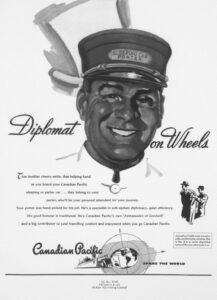
Pacific Railway Company Fonds.
Passenger train porters were noted for their style of dress, their humble (and even demeaning) disposition to passengers, and for their swag back home. Porter uniforms included overcoats, blazers, white shirts, ties, caps and polished shoes. The uniforms were expected to be spick and span — shoes polished, caps straightened and ties properly knotted.
A Day in the Life of a Black Railway Porter
Article
More About the Project
Project Partners
Cecil Foster (Curator) is a leading author, academic, journalist and public intellectual. His work speaks about the challenges that Black people have encountered historically in Canada in their efforts to achieve respect and recognition for their contribution to what is now a multicultural Canada.
Partners from Derailed Programs
- To learn more and follow the work of the Ontario Black History Society, visit their website:
http://blackhistorysociety.ca/
Twitter: @OBHistory - For more information on the City of Toronto Museums and Historical Sites:
https://www.toronto.ca/explore-enjoy/history-art-culture/museums/ - Meghan Swaby – Playwright, Writer of Derailed and Venus’ Daughter, Actor https://about.me/mswaby Twitter: @maYgn
- Cecil Foster – Transnational Scholar, Author of They Call Me George: The Untold Story of Black Train Porters and the Birth of Modern Canada
Twitter: @cecilfosterca - For more information on Toronto & York Region Labour Council: https://www.labourcouncil.ca/
- Bromley L. Armstrong Award
Toronto & York Region Labour Council’s annual award in honour of Bromley L. Armstrong for outstanding service to the labour and human rights movements in Canada: https://www.labourcommunityservices.ca/bromley_armstrong_award - For more information on Union:
https://torontounion.ca/toronto-union-events/ - Past Exhibit at Union (with NIA Arts Centre): Thank You For Keeping Us on Track, by Jordan Sook
- For more on Toronto Railway Museum:
https://torontorailwaymuseum.com/
Check out their historic plaque on the Brotherhood of Sleeping Car Porters
Articles & Porters in the News
- A century ago Winnipeg railways became ‘birthplace’ of fight for black Canadian workers’ rights – CBC
- Black railway porters and their decades-long fight for fair wages and a safe working environment – CBC Radio
- Black Sleeping Car Porters – Canadian Museum of Human Rights
- Canada’s Sleeping Car Porters Blazing The Civil Right Trail – Complex
- Demeaned, overworked and all called George: How Black train porters transformed Canada – Toronto Star
- How Black Train Porters Helped Birth a Multicultural Canada – Global News
- How Black Train Porters Helped Put Canada on Track – The Globe and Mail
- Hilliard Morris Shares His Time on the Rails – Windsor Star
- How the Black Sleeping Car Porters Shaped Canada– Cranbrook History Centre
- Interview with Cecil Foster and feature on Railway Porters TVO – The Agenda
- “North of the Colour Line: Sleeping Car Porters and the Battle Against Jim Crow on Canadian Rails, 1880-1920,” Labour/Le Travail, 47 (Spring 2001), p.9-41 by Sarah-Jane (Saje) Mathieu
- Opinion: Story of Sleeping Car Porters Demonstrates Quebec’s Racist Past – Montreal Gazette
- Racism Colin Forbes Experienced Nearly Derailed His Career as a Politician but Now is the Basis of New Play – London Free Press
- Rapid Ray Lewis – The Canadian Encyclopedia
- Stanley Grizzle Remembered – CBC
- Sleeping Car Porters in Canada – The Canadian Encyclopedia
- The Porter: Building a Better Canada for All – Edmonton City as Museum Project
- The story of the Black Porters on Canadian railways – Radio Canada International
- The Untold Story of Canada’s Black Train Porters – CBC
- Toot Sweet: When jazz ruled Montreal – Canada’s History
- The Toronto Joint Labour Committee for Human Rights (TJLCHR)
Books
- They Call Me George: The Untold Story of Black Train Porters and the Birth of Modern Canada, by Cecil Foster, Biblioasis, 2019.
Publisher’s Website: http://biblioasis.com/shop/non-fiction/they-called-us-george-a-history-of-the-black-train-porters-in-canada/ - My Name’s Not George: The Story of the Brotherhood of Sleeping Car Porters : personal reminiscences of Stanley G. Grizzle, by Stanley Grizzle with John Cooper
Toronto Public Library - A Long Hard Journey: The Story of the Pullman Porter, by Patricia and Fredrick McKissack”, Walker & Co., 1989.
- North of the Color Line: Migration and Black Resistance in Canada, 1870-1955, by Sarah-Jane (Saje) Mathieu, University of North Carolina Press. 2010
- From the Bottom of my Heart: Experiences of a Jamaican/Canadian doctor on four continents. By Colin E. Forbes, 2016
Bookstores for More Resources on Black History and Work from Afro-Carribean & Black Diaspora Authors
- A Different Booklist (downtown Toronto)
Twitter: @ADFRNTBooklist
IG: @adfrntbooklist - Knowledge Bookstore (Brampton)
Twitter: @Knowledgebooks
IG: @knowledgebookstore
Porters Who Were Mentioned in Derailed Digital Exhibition and its Associated Programs
- Stanley Grizzle
- Donald Moore
- Edsworth Searles
- Malcolm Streete
- Leo Chevalier
- Denzil Braithwaite
- John K. Crutcher
- Philip Randolph
- Michael Joshua Williams
- Harry Gairey
- Colin E. Forbes
- International Brotherhood of Sleeping Car Porters
- Garda Porter
- Ladies Auxiliary of the International Brotherhood of Sleeping Car Porters
- Ray Lewis
- Daniel Peterson
- Lee Williams
- Charles Ernest Williams
To learn more about specific porters, explore the following Digital Exhibits, Archives, and Collections…
Digital Exhibits and Archival Collections
- Archives of Ontario (Black Canadian History, Daniel G. Hill Fonds, Harry R. Gairey Sr Fonds, Multicultural History Society of Ontario Fonds)
- Black Women’s Association of Alberta
- Canadian Brotherhood of Railway, Transport and General Workers
- Canadian National Archives
- Canadian Pacific Archives
- City of Toronto Archives
- Concordia University Archives
- Exporail/Canadian Railway Museum
- Library and Archives Canada – Stanley Grizzle Fonds, Blog Article
- Multicultural History Society of Ontario
- Provincial Archives of Manitoba
- Provincial Archives of Alberta
- Toronto Archives – Digital Exhibit: Caribbean Connection: One Man’s Crusade (Donald Moore)
- Winnipeg Free Press